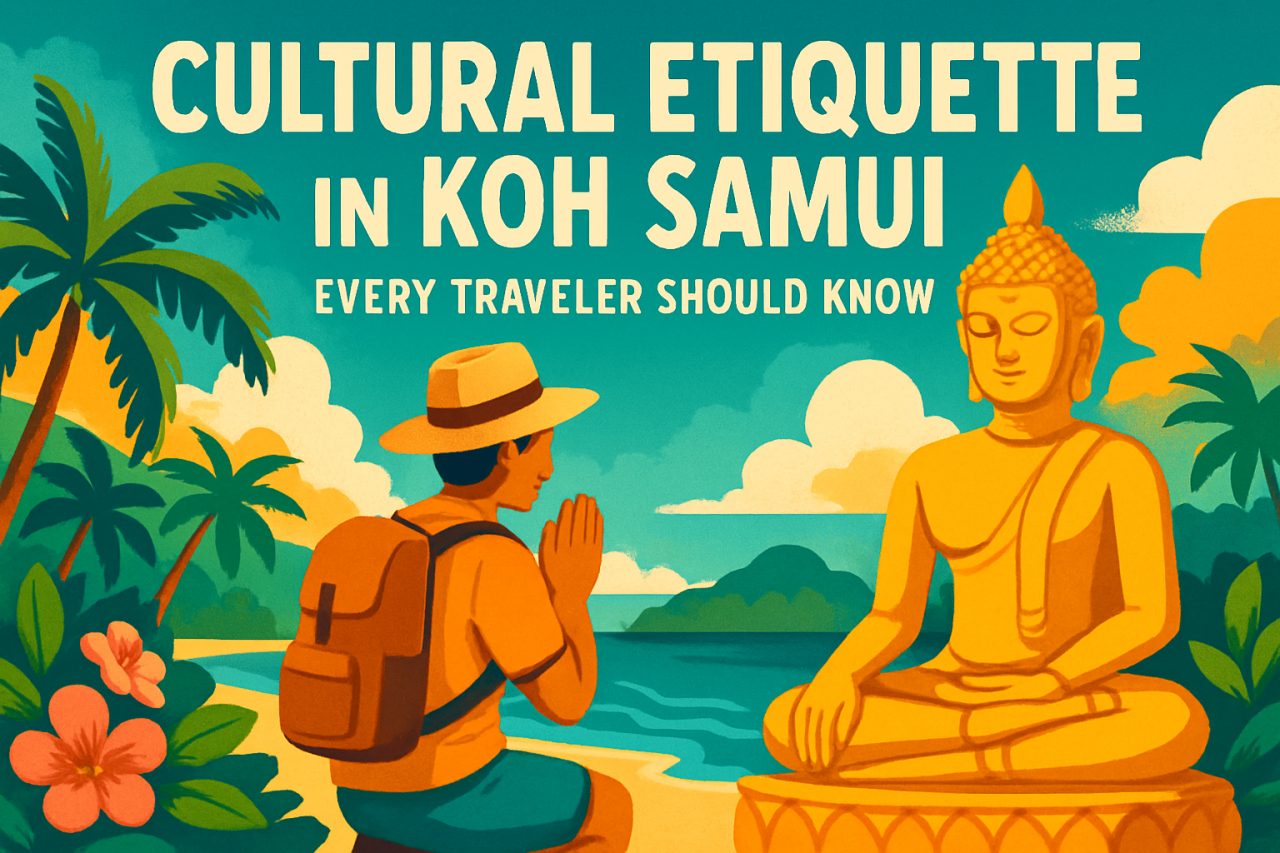
Cultural Etiquette in Koh Samui Every Traveler Should Know
By Vilhelms
There is something ineffably enchanting about arriving on Koh Samui. Perhaps it’s the way the coconut palms beckon in the early morning, or how the sun slants across the old wooden docks of Fisherman’s Village. Whatever the alchemy, you quickly sense that this island, while welcoming, is not merely a playground of turquoise water and mango smoothies. It’s a tapestry of traditions—woven with threads of reverence, restraint, and, yes, a surprising sense of humor.
If you’re like me, you’ve landed here with a backpack full of curiosity and, perhaps, a few lingering questions about how not to inadvertently scandalize your hosts. Allow me, then, to offer a gentle primer on Thai etiquette as it plays out on this particular island. The rules are subtle, the smiles are sincere, and the rewards—well, they’re the stuff of lasting memories.
The Wai: A Gesture More Nuanced Than a Handshake
Picture this: you step into a breezy noodle shop near Bophut Beach (search “Bophut Beach” on Google Maps), and the proprietor greets you with palms pressed together, fingertips at chest height, and a gentle bow. This is the wai, a greeting as old as the banyan trees that dot the island’s temples.
It is both salutation and benediction, a way of saying hello, goodbye, thank you, and sometimes, “please forgive my appalling flip-flops.” When returning a wai, mirror the gesture. If you’re unsure, err on the side of respect—the lower your hands and bow, the greater the deference. But don’t wai to children or service staff; in Thailand, status and age shape the exchange.
Temples: Remove Your Shoes, Not Your Curiosity
Koh Samui’s temples are more than architectural wonders—they’re repositories of the island’s soul. The gilded serenity of Wat Plai Laem (search for “Wat Plai Laem” on Google Maps) draws pilgrims and wanderers alike. Remove your shoes before entering the main hall. It’s less about hygiene than humility—a quiet acknowledgment that sacred ground deserves bare feet.
Dress modestly: shoulders covered, knees hidden, hats off. If you find yourself at Big Buddha Temple (officially “Wat Phra Yai”—search for it on Google Maps), note the air of reverence. Even the crows seem to caw more softly here. Photography is welcome, but do so with the same gentle discretion you’d afford an elderly relative.
The Head and the Feet: The Highest, the Lowest
Thai culture holds the head as the loftiest part of the body; the feet, the lowest. This isn’t just poetic—it’s practical etiquette. Never touch a local’s head, not even the tousled hair of a giggling child. Likewise, don’t point your feet at people or images of the Buddha. Sitting cross-legged is fine, but sprawl out with your toes aimed at the altar in Wat Khunaram (search for “Wat Khunaram” on Google Maps), and you’ll earn a few raised eyebrows.
Table Manners: Spoons, Forks, and Shared Plates
Dining on Koh Samui is an experience best shared, both literally and figuratively. Dishes are communal, and meals are orchestrated with a gentle choreography. You’ll notice that locals eat with a spoon in the right hand and use the fork to nudge food onto the spoon. Chopsticks may appear at noodle stalls, like those lining Lamai Beach (search for “Lamai Beach” on Google Maps), but rarely at home.
Don’t be surprised if someone refills your plate before you’re finished. It’s a gesture of hospitality, not impatience. And if you find yourself savoring a green curry at Supattra Thai Dining (search “Supattra Thai Dining” on Google Maps), linger over your meal. There’s no rush—only the slow music of island life.
Respect for Monks: A Quiet Reverence
On Samui, saffron-robed monks glide through the markets and beaches with a quiet gravity. Women should avoid physical contact with monks—even a casual brush of the hand is taboo. If you wish to offer alms, present them respectfully (it’s customary to place your gift on a cloth or in a bowl).
Monks are revered, but they are not unapproachable. I once spent an afternoon in the shade at Wat Racha Thammaram (search “Wat Racha Thammaram” on Google Maps), listening to a young monk’s stories about coconut farming and meditation. His laughter was as bright as the temple’s red ochre walls.
The Art of Smiling: More Than Politeness
Thais are famed for their smiles, and Koh Samui’s residents are no exception. The smile here is a multi-purpose tool: it smooths over misunderstandings, signals gratitude, and, occasionally, masks embarrassment or gentle disagreement. When in doubt, smile. It might not untangle every social knot, but it will certainly tighten a few bonds.
Final Thoughts: The Heart of the Island
In the end, etiquette on Koh Samui is less about strict rules and more about an attitude—one of humility, openness, and quiet appreciation for the island’s rhythms. If you approach each encounter with a willingness to learn, a dash of humor, and a sincere smile, you’ll find yourself welcomed not just as a visitor, but as a fellow traveler on the island’s winding, coconut-fringed roads.
So, pack your sense of wonder alongside your sunscreen. The etiquette here isn’t just about what you shouldn’t do—it’s the gentle art of being present, of noticing, of joining in the grand, sunlit dance that is Koh Samui.
For more on Koh Samui’s temples and beaches, search for places like “Wat Plai Laem,” “Big Buddha Temple,” “Lamai Beach,” and “Fisherman’s Village” on Google Maps. And remember: the best discoveries are often made just a little off the map.

Comments (0)
There are no comments here yet, you can be the first!