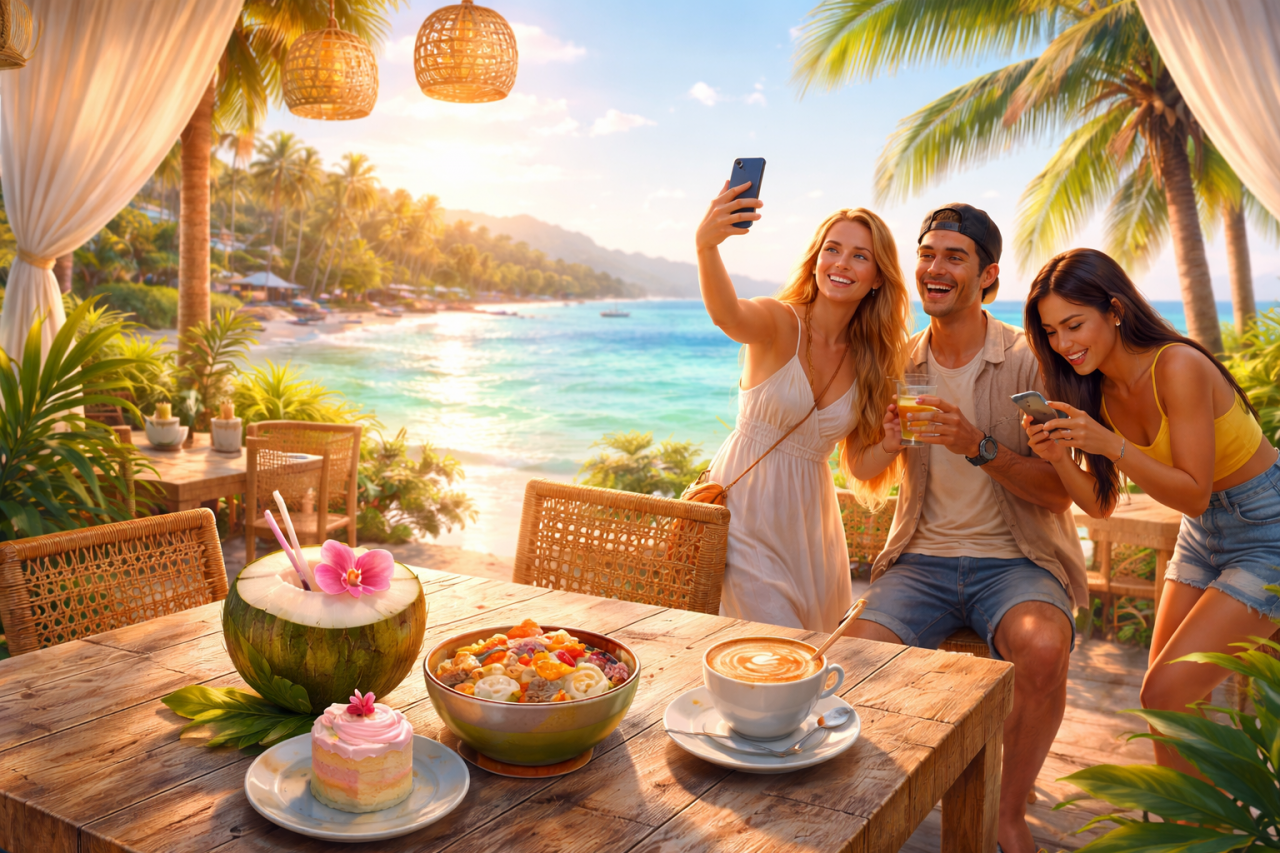
Koh Samui smells like coconut husks and sea salt. Early mornings feel soft, with sunlight slicing through palm fronds. Lately, everyone is posting photos from a photogenic Samui café—bright light, rattan seats, and drinks garnished like tiny tropical sculptures—and it’s easy to see why. I spent a few days island-hopping and coffee-sampling, and here’s a practical, sensory-led guide so you can savor the island and score that perfect shot without missing the island’s quiet rhythms.
Why Koh Samui sings to the senses
Koh Samui is a mix of smooth bays, choppy surf, and pockets of quiet jungle. Beaches change mood by the hour: sunrise is pastel and still, noon is blinding and buzzing, and dusk paints everything gold. Food smells sweet, salty, and spice-driven—think grilled seafood, papaya salad, and sticky rice with mango. Moving slowly is the best way to notice small pleasures: the sand between toes, the clink of ice, the steam of a freshly brewed cup.
The café everyone’s posting from — what to expect
I won’t guess the exact Instagram-famous spot for you, but many of the cafés that trend share traits: open-air seating, local wood and rattan furniture, lots of daylight, and a menu heavy on fresh fruits and specialty coffee. These places often pair a calm garden or sea view with a menu that celebrates Thai produce.
Tips for visiting such cafés:
– Try to arrive between 8:00–10:00 AM for soft light and fewer people.
– Ask for a shaded table if you plan to photograph—direct noon sun can be harsh.
– Order something local: a Thai iced tea, fresh coconut, or a mango smoothie with sticky rice on the side.
Beaches worth waking up for
- Chaweng Beach: The longest and most lively beach on Koh Samui. Great for swimming and people-watching. Search for it on Google Maps by typing: Chaweng Beach.
- Lamai Beach: A slightly quieter alternative with dramatic rocks at the ends and good restaurants nearby. Search for it on Google Maps by typing: Lamai Beach.
- Maenam Beach: Calm, family-friendly, and with a slower pace—try sunrise here. Search for it on Google Maps by typing: Maenam Beach.
Best beach tips:
– Go for an early-morning walk—6:00–7:30 AM is blissful and cool.
– Bring reef-safe sunscreen and a lightweight sarong for quick shade.
– Watch for local longtail boats; they give the seascape immediate character.
Temples and quiet corners
- Big Buddha Temple (Wat Phra Yai): A large golden statue on a small island connected by a causeway. It’s photogenic at sunrise and respectful to dress modestly (cover shoulders and knees). Search for it on Google Maps by typing: Wat Phra Yai.
- Wat Plai Laem: A colorful temple complex with statues and peaceful ponds. Early morning visits are quieter and cooler. Search for it on Google Maps by typing: Wat Plai Laem.
Respectful temple tips:
– Wear a light scarf or sarong if your outfit is revealing.
– Remove shoes before entering certain buildings.
– Speak softly and keep phone volume low; locals appreciate the calm.
Eating like a local: quick food guide
Street food and small family-run restaurants often give the most flavor for the least money. Sample these:
– Som Tam (papaya salad): Spicy, sour, and crunchy—ask for “mai pet” if you prefer less heat.
– Khao Pad (Thai fried rice): A reliable, comforting dish after a long day of sightseeing.
– Grilled seafood: Fresh, simple, and often served with zesty dipping sauces.
Where to look:
– Fisherman’s Village Walking Street (Bophut) for a lively evening market with seafood and sweets. Search for it on Google Maps by typing: Fisherman’s Village Walking Street.
– Local roadside stalls near markets—follow the crowds and the smoke.
Getting around and practicalities
- Scooter rental is the most flexible option; helmets are mandatory (and safer). Drive cautiously—roads can be narrow and winding.
- Taxis and songthaews (shared pickup trucks) run around major towns, but agree on a price or insist on the meter before you go.
- ATMs are plentiful in Chaweng and Nathon, but bring cash for smaller beach stalls and temples.
Packing tips:
– Lightweight, breathable clothing plus one light rain layer (sudden showers can happen).
– A reusable water bottle—hydration is essential in that heat.
– A camera or phone with a good portrait mode for that café shot; bring a small microfiber cloth for salty lenses.
Camera and café composition tips
If you want a photo that feels like a travel magazine spread:
– Use natural light—sit so your face or your drink is lit from the side for depth.
– Include a touch of context: a palm leaf, a rattan chair, or a slice of mango in the frame.
– Shoot a mix of close-ups (cup details) and wider shots (table plus background).
– Try this at sunrise: a flat-lay of your breakfast with the ocean or garden in the distance.
Sustainability and local respect
Koh Samui’s charm depends on its environment and community. Small choices matter:
– Bring a reusable straw or say “no straw, please” at cafés.
– Avoid single-use plastics where possible.
– Support local businesses—buy fruits, crafts, or meals from family-run stalls.
Final taste of Samui
Koh Samui rewards slow mornings, loud laughs at beachside grills, and careful wandering through temple courtyards. That café everyone is posting from captures a slice of Samui’s light, but the island’s real magic is in the small details: the steam of coconut on a cool morning, the way a lime brightens a dish, the hush after sunset. Pack a camera, a curious appetite, and a polite smile—Samui will take care of the rest.

Comments (0)
There are no comments here yet, you can be the first!