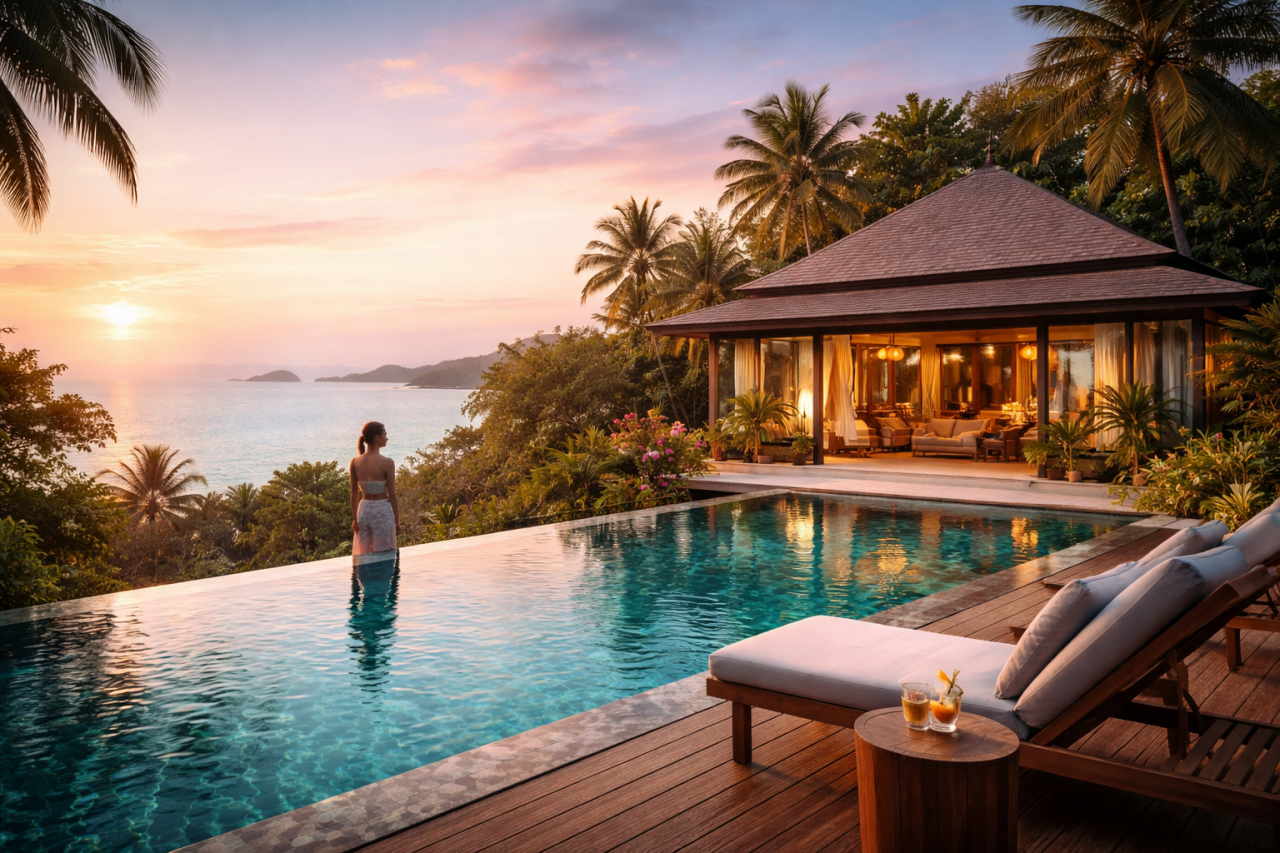
There is a certain hush that falls on Koh Samui as the light leans golden. Palm fronds sketch slow shadows. A villa with shuttered windows and an infinity pool seems less like architecture and more like a promise: of quiet mornings, salted air, and the easy timing of island life. I write this as if I’m standing on that terrace beside you, cup in hand, pointing out the things that make Samui gentle to the senses and easy to travel through.
First impressions: arriving and settling in
You usually arrive by air at Samui International Airport. The ride from the airport to the villa is the island’s first unfolding scene — motos weaving through roadside stalls, bougainvillea spilling over low walls, fishermen repairing nets by hand. Give yourself a slow hour to acclimate; rushing undoes the island’s rhythm.
Practical tip: taxis and songthaews operate island-wide, but for full flexibility consider renting a scooter or a car. Roads can be narrow and winding; if you rent a scooter, wear a helmet and ride cautiously, especially at night.
The villa experience: what makes it feel like a dream
A Samui villa that feels dreamlike usually combines a few simple things: an open-plan living space that breathes, a private pool reflecting the sky, and a terrace oriented toward sunset. Furniture tends to be teak or rattan, cool under the palm canopy, with textiles that catch the breeze.
Small comforts matter: good blackout curtains for afternoon naps, a kettle for late-night tea, and mosquito nets if the villa opens directly to a garden. Ask your host about local produce — many villas will happily arrange a morning market delivery of mangoes, papaya, and eggs from nearby farms.
Beaches worth lingering on
Koh Samui’s coastline is varied: quiet coves, long sandy stretches, and areas where nightlife hums after dark. Here are a few beaches to consider:
- Chaweng Beach — the island’s liveliest, a broad sweep of sand with restaurants and bars along the shore. If you like people-watching and an easy walk from villa to beach, this is a good choice.
- Lamai Beach — a bit more relaxed than Chaweng, with smooth sand and dramatic rock formations at low tide.
- Bophut Beach and Fisherman’s Village — a softer scene where old wooden shop-houses meet sunset dining. The village has evening markets and pleasant riverside restaurants.
- Maenam Beach — quieter, with views toward the mainland and Koh Phangan, ideal for long, undisturbed walks.
You can search for any of these places on Google Maps by typing: Chaweng Beach; Lamai Beach; Bophut Beach Fisherman’s Village; Maenam Beach.
Tip: mornings are best for swimming; sea conditions can change with monsoon patterns and local currents.
Scent and flavor: food to seek out
Good food is often the highlight. Samui’s kitchens balance sun-bright herbs, tart lime, and the island’s catch of the day. Try:
- Classic dishes like tom yum goong (spicy shrimp soup) and som tam (green papaya salad).
- Freshly grilled fish from local stalls or beachfront restaurants.
- A casual breakfast of jok (Thai rice porridge) in the early hours, when the island is still cool.
Restaurants and night markets vary by season. For a relaxed, atmospheric evening, head to Fisherman’s Village in Bophut, where you can stroll the lane and choose from many sea-view tables. You can search for it on Google Maps by typing: Bophut Fisherman’s Village.
Note: when ordering street food, aim for stalls that look busy and have food turning over quickly — fresher is almost always better.
Cultural notes and quiet sites
Koh Samui has a few landmarks that reward a respectful visit. They are best seen slowly, without loud phones or hurried selfies.
- Wat Phra Yai (Big Buddha) — an iconic 12-meter golden Buddha that overlooks the northeast coast. It’s photogenic and spiritual; dress modestly and remove your shoes before entering temple buildings. You can search for it on Google Maps by typing: Wat Phra Yai Big Buddha.
- Wat Plai Laem — a colorful temple complex with ornate statues and a tranquil fish-filled lake.
A modest historical note: Samui was historically a coconut and fishing economy; Buddhist temples and small communities grew around these livelihoods. When you visit, take a moment to observe temple ritual and offer a small donation if you light incense or make a merit offering.
Gentle adventures: short excursions from the villa
You don’t need to cross the island to have a meaningful day. Consider these measured outings:
- A half-day boat trip to Koh Tao or Koh Nang Yuan for snorkeling, if you want clearer water and abundant reef life.
- A visit to Na Mueang Waterfall for a short walk and a cooling pool; the lower falls are easier to access and family-friendly.
- A cooking class in a simple kitchen, where you learn to balance sweet, sour, salty, and spicy — a practical souvenir.
When booking tours, choose operators who provide life jackets and clear safety briefings. It keeps the day easy and the memories intact.
Nightlife and evening calm
Samui’s evenings range from quiet dinners to lively beachfront bars. Chaweng is the liveliest, while Bophut and Lamai offer gentler nightlife. For an evening with fewer crowds, call ahead to a restaurant to reserve a table by the water; sunset spots fill quickly during high season.
Soft humor: even the busiest bar seems to slow down at midnight, as if the island tucks the world in and says, “Tomorrow, again.”
Respectful travel: tips for considerate visitors
Travel here with care. A few simple rules help the island stay beautiful and the culture intact:
- Dress modestly at temples. Cover shoulders and knees, and speak softly.
- Avoid touching or climbing on sacred statues and temple structures.
- Use reef-safe sunscreen when swimming near coral; sunscreens with oxybenzone can harm marine life.
- Dispose of rubbish in proper bins; plastic collection is improving but remain mindful and carry a spare bag for trash if needed.
These small actions make a meaningful difference over time.
Practical details and packing lightly
Pack for comfort: light cottons, a waterproof jacket if you visit during the rainy season (typically September–November), a hat, reef-safe sunscreen, and a reusable water bottle. ATMs are common, but set aside some cash for markets and small vendors.
If you plan to rent a scooter, bring an international driving permit if required by your insurer. Check with your travel insurance about motorcycle coverage; it often requires extra documentation.
A final evening on the terrace
The villa pool reflects the sky as it deepens to indigo. You can hear the distant clink of a longtail boat returning to shore and, if you wake early, the first call of a vendor pedaling sweet coconut pancakes. Travel on Koh Samui rewards slow attention: the small market details, the way light sits on water, the friendly nods from people who’ve lived here for years.
If you are packing for a trip, leave room for improvisation. The best discoveries on Samui are seldom planned. They arrive as invitations — a recommended restaurant, a quiet beach, a temple bell at dusk. Take them deliberately, and the island will unfold like a conversation that knows how to listen.
Safe travels, and may your stay feel, in its small honest moments, a little like a dream.

Comments (0)
There are no comments here yet, you can be the first!