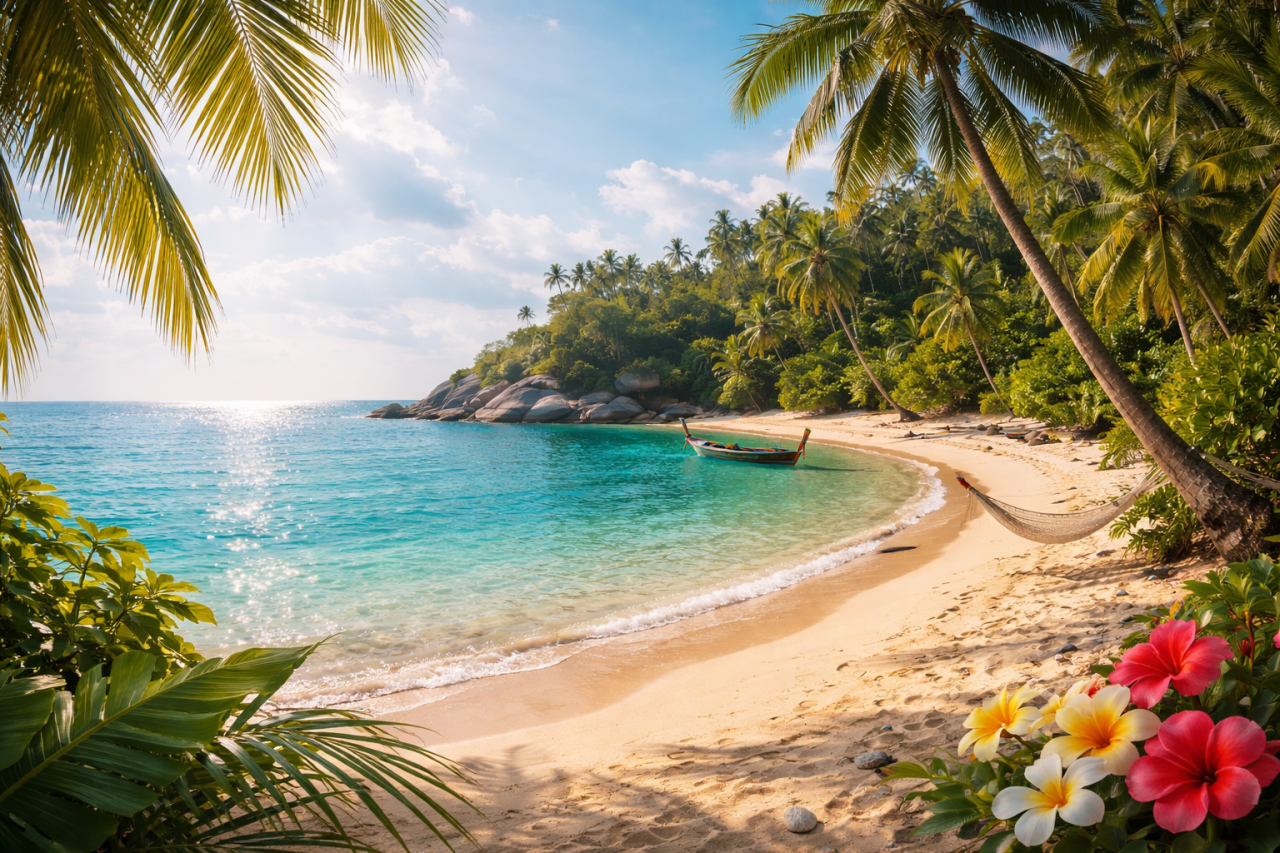
Koh Samui has a handful of showstoppers—Chaweng’s buzz, Lamai’s cliffs—but sometimes the best day is the quiet one, when you stumble onto a pocket of shoreline that feels made for you. This secret Samui beach is one of those places: warm sand, gentle surf, and a hush that makes everything slow down. Ready to meet your new favorite corner of the island?
Why this beach feels like paradise
Wind comes soft here. Long-tail boats clack as they glide past, leaving cigars of foam that quickly fade. The scent of grilled satay and lemongrass wafts from a nearby shack at dusk. Shade trees lean low, their leaves flicking sunlight across the sand. It’s intimate, not Instagram-perfect—quiet, hospitable, and real.
You’ll know you’ve arrived when the crowd thins and the sea takes on that particular green-blue only the Gulf of Thailand can produce. Bring a book or nothing; either way, you’ll feel like you’ve walked into a postcard that remembers to breathe.
Where to find it (practical directions)
This is a small, lesser-known stretch of coast on the southern side of Koh Samui, tucked between better-known beaches. The neighborhood is peaceful, with a handful of local eateries and family-run bungalows. If you’re navigating by taxi or motorbike, aim for the nearest named landmark and then take the smaller coastal road.
You can search for nearby places on Google Maps by typing: Big Buddha (Wat Phra Yai), Chaweng, or Lamai Beach to orient yourself on the island. From those points, ask a friendly local for directions to the smaller unnamed coves along the south coast—Thai hospitality will usually point you right.
Tips for getting there:
– Rent a scooter in Koh Samui town or Chaweng (check weather and your riding confidence first).
– Taxis and songthaews (shared pick-up trucks) can drop you close; expect modest fares—ask for a price before you hop in.
– Parking is usually available near the beach access path; keep coins handy for small parking fees.
Best time to visit
Peak season: December to March. Expect clearer skies, calmer seas, and higher prices. Arrive early (before 10:00) to snag the best stretch of sand.
Shoulder months: April–June and September–November. Fewer tourists, but watch the weather. Some days bring heavier swells, especially during the monsoon shoulder periods.
Avoid: the wettest heart of the monsoon if you want long sunbathing sessions. Still, rain can be dramatic and beautiful—good for a moody afternoon if you don’t need perfect beach weather.
What to pack and local tips
Pack light, pack smart. Sunscreen, reef-safe where possible. A hat. Flip-flops or water shoes for rocky bits. Cash—many local vendors prefer it. A lightweight sarong doubles as a towel, cover-up, and shade.
Local insight: vendors often offer fresh coconut water and grilled seafood—try the calamari or a spicy papaya salad. Language tip: a smile and “khop khun krap/ka” goes a long way.
Checklist for a perfect beach day:
1. Mosquito repellent for late afternoon.
2. Refillable water bottle (tap water isn’t recommended; get filtered water).
3. Small dry bag for phone, wallet, and sunscreen.
4. A printed address or clear Google Maps search term to show drivers.
Food and drink nearby
Small family restaurants dot the approach to the beach. Expect grilled fish, seafood stir-fries, and sticky rice with mango when it’s in season. Prices here are typically lower than the main tourist strips—think local lunch for 80–200 THB, simple seafood dinners around 200–400 THB depending on choices.
If you want a sturdier meal before or after:
– Search for: Fisherman’s Village (Bophut) for a bigger dining scene.
– Search for: Chaweng Night Market for late-night bites and variety.
Things to do besides lounging
- Snorkel near the rocky outcrops at low tide—bring your own mask for best clarity.
- Walk the coastline at sunset; the light gets buttery and the silhouettes of fishing boats are photogenic.
- Rent a kayak for a slow paddle along the shore—calm days are perfect.
- Visit nearby temples or markets to balance quiet beach hours with local life.
Searchable places for a day trip:
– Big Buddha (Wat Phra Yai)
– Wat Plai Laem
– Fisherman’s Village (Bophut)
Safety and etiquette
Keep an eye on currents—rips can form unexpectedly. Swim where others do and avoid deep water alone. Don’t leave valuables unattended; bring only what you need.
Respect local customs: modest dress when visiting temples, polite language, and remove shoes where signs indicate. If you buy from a family-run stall, small bargaining is fine but be kind—these are people’s livelihoods.
Quick travel logistics
- How to get to Koh Samui: Most visitors arrive via Samui International Airport (USM) with regional flights, or by ferry from Surat Thani, Donsak, or nearby islands. Search for “Samui Airport” or check major ferry operators for schedules.
- Currency: Thai Baht (THB). ATMs are common in main towns but scarce at tiny beach spots—carry cash.
- Connectivity: Mobile data is good in populated areas; sleepy coves may have patchy signal.
Final thoughts — why you should go
This little strip of Koh Samui feels like paradise because it strips away the noisy trimmings and returns to warm sand, honest food, and slow afternoons. It’s a beach that gives you time back—time for a nap, time for a long walk, time for a conversation with someone who works a nearby stall. If you crave a slice of Samui that’s peaceful and real, this secret cove will do exactly that: hush the mind, salt the skin, and leave you fresh.
Want to plan the perfect day? Pack light, arrive early, and bring an appetite for seafood and small discoveries. You’ll leave with cleaner lungs and a slower pulse—exactly as paradise should feel.

Comments (0)
There are no comments here yet, you can be the first!