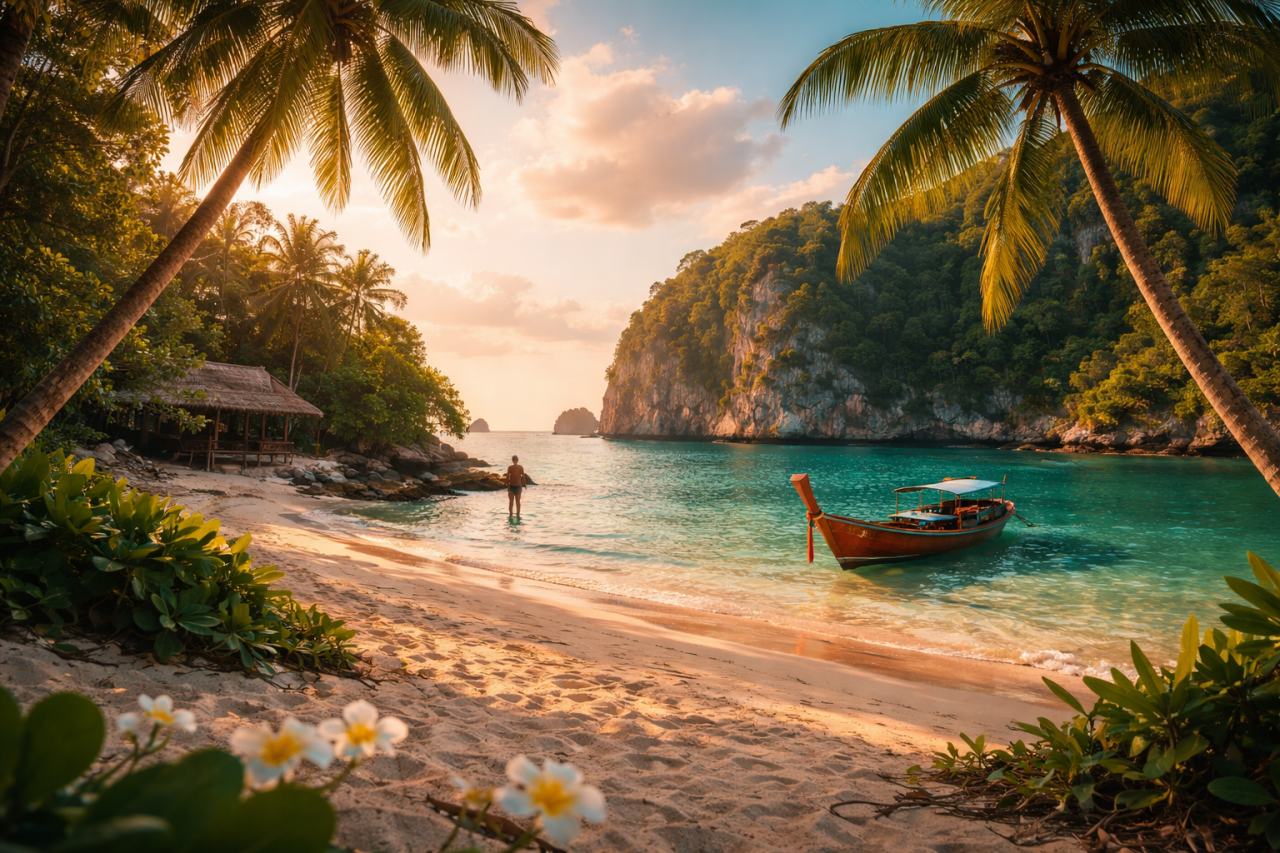
Koh Samui hums with a confident ease. Palm leaves clap a slow rhythm. The air carries salt, grilled fish, and the faint tangle of lemongrass from a nearby kitchen. Walk a little farther than the main strip, and you’ll find a beach that asks very little of you — only that you slow down and notice.
Where to find that almost-secret stretch
The north and east coasts of Koh Samui have quieter coves than the famous Chaweng Beach. Try exploring the crescent beaches around Bophut and the quieter headlands toward Maenam. A short motorbike ride past Fisherman’s Village in Bophut leads to hidden coves, small local restaurants, and pockets of soft, palm-dappled sand.
Tip: rent a scooter from a reputable shop in Bophut or Chaweng. Ask the owner for a local landmark — a temple, a villa, or a roadside fruit stall — rather than relying solely on GPS. Locals often give directions by referencing a single big tree or a particular house with bright tiles.
Morning light and the texture of sand
Get up early. The sand is cool and fine between your toes at dawn. Light comes slow and pink, and the sea surface looks like hammered metal. You’ll hear long-tail boats heading out and the distant clink of nets. Bring a lightweight sarong or towel; it dries fast in Samui’s humidity and doubles as a sun shield.
Practical tip: if you want near-empty stretches, aim for 6:00–8:00 a.m. on weekdays. Weekends and high season draw more families and speedboat crowds.
Sights nearby worth a slow visit
- Fisherman’s Village, Bophut — A charming row of wooden shophouses, cafes, and boutiques. The evening market (Bophut Night Market) is lively and full of grilled seafood scents. You can search for it on Google Maps by typing: Fisherman’s Village, Bophut, Koh Samui.
- Wat Phra Yai (Big Buddha Temple) — A 12-meter golden Buddha on a small island connected by a causeway. It’s photogenic and calm in the early morning. You can search for it on Google Maps by typing: Wat Phra Yai (Big Buddha Temple).
- Hin Ta and Hin Yai Rocks — The famous “Grandfather and Grandmother” rock formations near Lamai Beach make for a quick, quirky stop if you’re exploring the southern coast. You can search for it on Google Maps by typing: Hin Ta and Hin Yai Rocks.
Sensory note: at Fisherman’s Village, stalls sizzle with skewered prawns and the sweet-lime tang of seafood marinades. The aroma follows you down the street like a gentle insistence to stay.
Food that feels like a conversation
Eat where local families gather. Small beachfront restaurants often serve the best tom yum, freshest grilled fish, and papaya salad with the right mix of sour and fire. Try ordering “pla pao” (salt-crusted grilled fish) from a place where the cooks come out with tongs and a grin.
Restaurant tip: look for places busy with locals. If a place on the quieter end of the island fills with motorcycles and language that isn’t tourists’ English, you’re on the right track. Ask a host or vendor for recommendations — they tend to point to a single cook or stall where they’ve eaten for years.
How to get around and move slowly
Scooter: the most flexible option. Choose a well-maintained bike, wear a helmet, and keep spare cash for fuel stops. Petrol stations are easy to find near Chaweng and Nathon, but smaller pumps dot back roads.
Taxi/minivan: safe and comfortable for groups. Agree the route and price before you go. Songthaews (shared pickup trucks) are cheap, colorful, and local — wave one down at village junctions.
Respectful travel tip: when visiting temples like Wat Phra Yai, cover your shoulders and knees. Leave shoes outside prayer areas and keep your voice low.
Little rituals that make a day on Samui feel full
- Walk barefoot after a rain shower and notice the chorus of coconut water and earth.
- Buy a bag of ripe mangoes or rambutans from a roadside stall and eat them standing up as you watch the tide.
- Stop at a panoramic viewpoint before sunset. The island’s curves and the sea beyond look like layered paint when the light softens.
Insider note: locals often say the best sunsets are from the western headlands near Nathon or the beach-front bars of Lipa Noi. The evening breeze brings relief and the faint, comforting clatter of distant kitchens.
Practical safety and sustainability tips
- Sun care is essential. Bring reef-safe sunscreen, a hat, and a light cover for midday shade.
- Protect coral and marine life. Don’t stand on reefs, take shells, or buy products made from endangered species.
- Hydrate and pace alcohol on hot days. Coconut water from roadside stalls is an excellent, natural electrolyte drink.
Environmental tip: many small beaches rely on seasonal cleanup efforts. If you can, carry a small bag for litter and dispose of it at a town center bin. A little care goes a long way.
Where to stay if you want quiet and comfort
Look for family-run guesthouses or small boutique bungalows on the northern and western coasts. They usually trade flashy frills for calm service, shaded verandas, and hosts who will point you to the best local food.
Booking tip: read recent reviews for noise and proximity to roads. A villa tucked behind palms will feel far from the world, even when Chaweng’s nightlife buzzes only a 20–30 minute drive away.
A final note on traveling like a respectful guest
Koh Samui gives generously when you arrive with patience and curiosity. Speak a few Thai phrases (sawasdee and khop khun go far), listen to recommendations from long-time residents, and leave places better than you found them. The island rewards small courtesies: a smile, a careful foot on a coral path, and the choice to slow down.
You can search for any of the places mentioned on Google Maps by typing their names exactly as written above. Pack light. Bring a sense of wonder. And when you find that almost-secret beach, sit down, breathe, and let the island do the rest.

Comments (0)
There are no comments here yet, you can be the first!