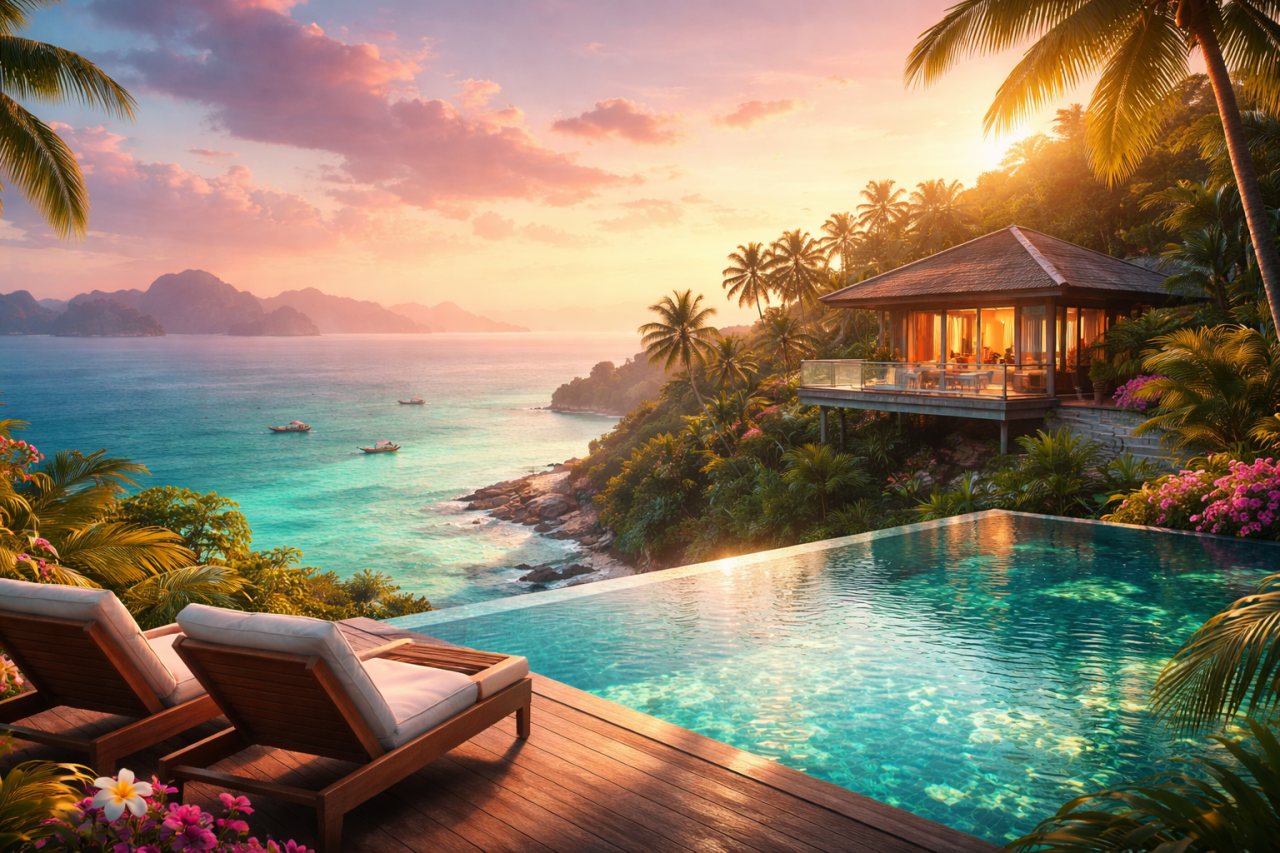
There’s a particular hush that settles over Koh Samui around dusk. The air cools, the cicadas quiet, and the last light turns the Gulf of Thailand to a sheet of iron and gold. Standing on a gentle promontory or a white-sand beach, you feel time loosen, and the island’s very human scale comes into focus: fishermen hauling nets, vendors lighting lanterns, temples outlined against the sky. This is a small island with a generous heart.
First impressions: arriving and settling in
Fly into Samui Airport (Suvarnabhumi and regional flights connect here) and you’ll notice how compact everything feels. The drive from the airport to most southern and central beaches rarely exceeds an hour. Traffic is usually forgiving; mopeds populate the narrow roads, and there’s a comfortable slowness to life that’s easy to settle into.
Tip: If you plan to rent a scooter, opt for one with good brakes and basic insurance. Roads can be steep and winding, especially around the interior hills.
Best beaches for different moods
Koh Samui’s coastline offers distinct temperaments. Here are a few that I return to again and again.
- Chaweng Beach — The island’s most famous stretch. Expect lively bars, restaurants, and a long ribbon of soft sand. It’s ideal if you want energy and choice within easy walking distance.
- You can search for it on Google Maps by typing: Chaweng Beach
- Lamai Beach — A slightly quieter cousin to Chaweng, with a relaxed dining scene and interesting rock formations at the southern end.
- You can search for it on Google Maps by typing: Lamai Beach
- Bophut Fisherman’s Village Beach — Gentle, family-friendly waters and a charming village atmosphere with wooden shop-houses and evening markets.
- You can search for it on Google Maps by typing: Bophut Fisherman’s Village
- Maenam Beach — Calm and wide, favored by those seeking a quieter pace and views of Koh Phangan across the channel.
- You can search for it on Google Maps by typing: Maenam Beach
Practical note: Beaches face seasonal changes. The sea is clearest between January and April; rainy season swells the surf and can shift sandbars.
Sights that touch the senses
Walkable temples, leafy waterfalls, and dramatic viewpoints knit the interior together. These places reward unhurried exploration.
- Wat Phra Yai (Big Buddha) — A large, serene Buddha statue that rises above the northern headland. It’s both a local place of worship and a peaceful viewpoint.
- You can search for it on Google Maps by typing: Wat Phra Yai (Big Buddha), Koh Samui
- Hin Ta and Hin Yai Rocks (Grandfather and Grandmother Rocks) — Coastal rock formations with a long local legend attached, visible from the Lamai shore.
- You can search for it on Google Maps by typing: Hin Ta & Hin Yai Rocks
- Na Muang Waterfall 1 and 2 — Two nearby cascades that feel intimate rather than touristy. The pools are inviting after a humid ride through the hills.
- You can search for it on Google Maps by typing: Na Muang Waterfall
Small rituals matter: remove your shoes at temple entrances, keep shoulders covered, and speak softly where people are praying. These gestures are simple but deeply respectful.
Food: quiet meals and lively markets
The island feeds you in a dozen ways. Street stalls and night markets are where flavors sing; hotel restaurants show a different, polished side.
- Fisherman’s Village Walking Street (Bophut) — On certain evenings, the village transforms into a market of food stalls, crafts, and live music. It’s convivial without being frantic.
- You can search for it on Google Maps by typing: Fisherman’s Village Walking Street, Bophut
- Local seafood restaurants along the coast — Simple plates of grilled fish, tom yum, and som tam feel particularly good after a day in the sun. Ask for the day’s catch and the mildly spicy versions if you prefer less heat.
- Beachside cafes — Great for lazy breakfasts and slow afternoons with good coffee and a book.
A small culinary tip: when a vendor offers a sample of a sauce or dipping paste, take it. Locals often balance flavor in ways that will remind you of why simple ingredients are so powerful.
Activities — how to fill your days
Koh Samui is gentle about adventure. You can fit in excursions or take long pauses between them.
- Snorkeling and boat trips — Full-day trips to Koh Tao and Koh Nang Yuan are popular for clearer waters and richer reefs. Choose operators with good reviews and environmental-minded practices.
- Thai cooking classes — A nice way to bring home a skill and a few secret tips on balances of sweet, sour, salty, and spicy.
- Yoga and wellness — The island has a long-established wellness scene. Morning classes in beachside studios are restorative and social in the best way.
Safety tip: wear reef-safe sunscreen when you swim or snorkel. It’s kinder to coral and increasingly required by responsible operators.
Nightlife and evening rituals
Evenings on Koh Samui are varied. In Chaweng and Lamai you’ll find bars and live music; in quieter coastal towns, there are low-lit seafood restaurants and moonlit walks.
- Full Moon and party scenes — Koh Samui isn’t Koh Phangan, but you’ll still encounter lively beach bars and occasional themed nights. If you want quiet, ask locals where the gentle spots are.
- Sunset spots — Consider the northwestern headlands for a quieter sunset view. A simple beer or coconut in hand feels entirely right here.
A modest historical note: the island’s tourism began to grow in the 1970s, and you’ll still find pockets that remember the older rhythm—a reminder that development and local life coexist if we tread lightly.
Respectful travel: small gestures that matter
The island feels like a shared backyard. A few small habits make the experience better for everyone.
- Dress modestly when visiting temples and local neighborhoods.
- Support small businesses and family-run restaurants when you can.
- Keep noise down late at night near residential areas.
- Take rubbish with you if you can’t find a bin; public waste systems are uneven.
These choices are practical and kind. They preserve the quiet that makes dusk feel like a private blessing.
Practicalities and timing
- Best time to visit: December to April for drier weather and calm seas.
- Getting around: Rent a car or scooter for flexibility; taxis and songthaews are available but less frequent in quieter corners.
- Money: ATMs are common in major towns; carry some cash for markets and smaller vendors.
A gentle caution: medical facilities are adequate for most needs, but for anything serious you may need transfer to Koh Samui Hospital or onward to the mainland. Travel insurance is wise.
A final invitation
Stand at the edge of a quiet beach as the sky softens, and notice the small, precise pleasures: the smell of grilled seafood, the distant call of a prayer bell, a family packing up after a day of picnicking. Koh Samui works on the scale of human moments. It rewards attention, patience, and a willingness to slow down.
You can plan activities and make lists, but don’t forget to leave room for the kind of wandering that reveals things by accident—a tucked-away temple, a late-night roadside vendor with the best curry, or a viewpoint where the sea seems to hold its breath. Come with curiosity, travel respectfully, and let the island’s gentle rhythms teach you how to do very little and enjoy it fully.
Comments (0)
There are no comments here yet, you can be the first!