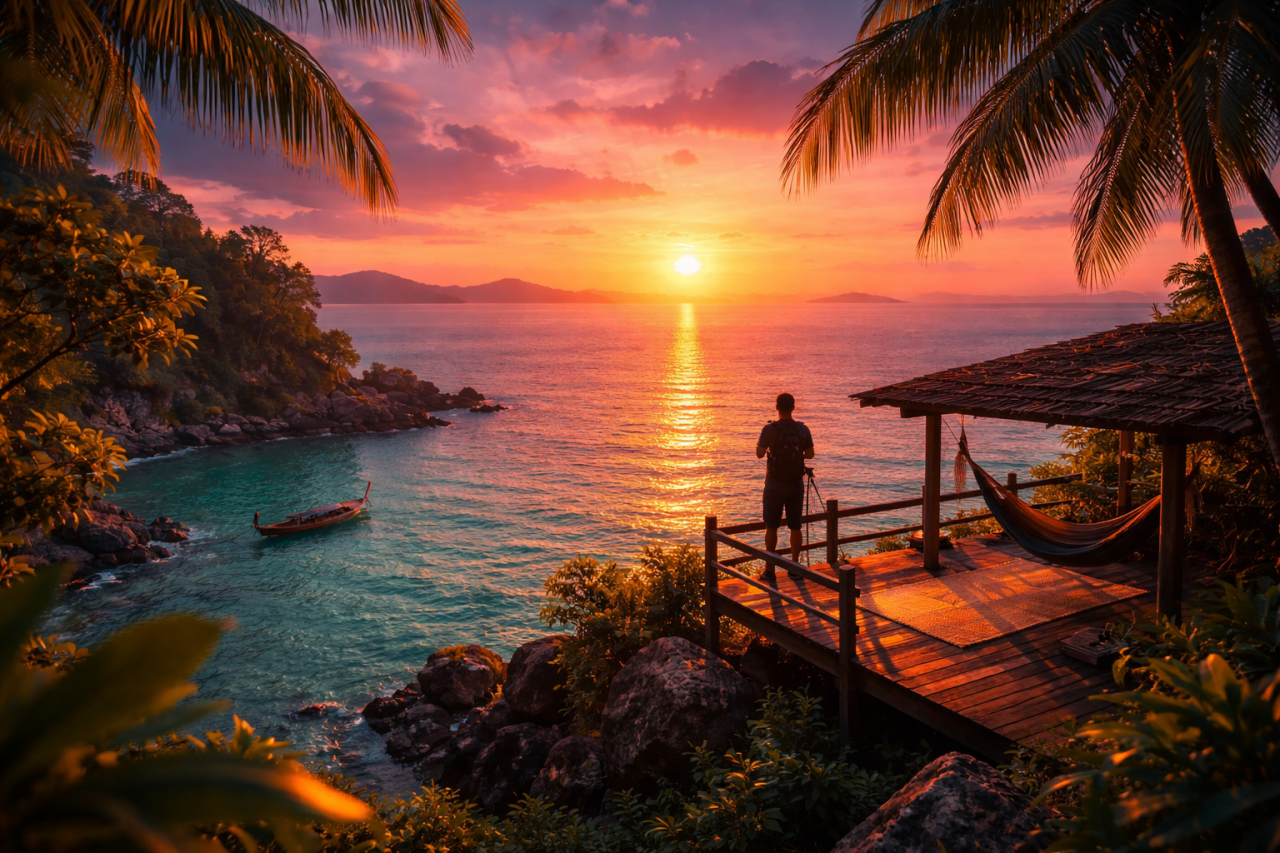
There’s a particular hush that settles over Koh Samui in the hour before the sun drops. Boats pull a little closer to shore, the chatter from beachside cafés thins, and light finds odd, sudden clarity—cutting between coconut fronds, catching the rust on a fisher’s anchor. I’ve watched more sunsets here than I can count, and there’s one place people keep overlooking, a small, honest edge of the island that rewards patience rather than spectacle.
Why this spot matters
It isn’t flashy. You won’t find a cluster of Instagram profiles staging the same pose at the same minute. What you will find is a simple seam where sea and sky meet in a way that lets the day close without hurry. The view is not about a single perfect frame; it’s about the series of small, exact shifts—the way a gull lines up with a mast, how the last light pools under a palm, how the temperature drops just enough that you notice it.
When I say “everyone is missing this spot,” I mean it in the quiet way of someone pointing out a neighbor’s garden that’s been underused. People cruise past because they’re looking for big names—Chaweng, Lamai—or for the nightlife on the northern beaches. They miss the fringe places where the island speaks softer.
Where to go
I won’t pretend there is one secret cove. Part of the pleasure is finding your own. Still, a few accessible places on Koh Samui tend to be overlooked at sunset and are worth checking out:
- Bang Por Beach — a long, low-traffic stretch on the northwest coast. It’s calm, and the shallow water makes for long, reflective foregrounds as the light falls.
- Maenam Beach — quieter than its neighbors and framed by coconut palms. There are spots along the sand where local fishermen mend nets as the sky goes soft.
- Koh Samui’s northern coastal roads near Plai Laem — several small, low-key viewpoints sit between temples and family-run restaurants.
You can search for each of these on Google Maps by typing: Bang Por Beach, Koh Samui; Maenam Beach, Koh Samui; Plai Laem, Koh Samui.
How to get there and when to arrive
Traffic on Koh Samui loosens late in the afternoon. If you’re coming by rental scooter, aim to leave about 60–90 minutes before sunset. Drive gently; the road edges are often uneven and the island is full of motorbikes and songthaews (shared taxis).
If you prefer taxis, agree on a price before you set off—or ask your guesthouse to call a reliable driver. You’ll want to arrive at least 30 minutes before sunset. The light arrives quietly and then deepens fast; being there early allows you to find a sheltered spot and watch the progression.
What to bring
- A light jacket or wrap: evenings cool down faster when the sea breeze picks up.
- A small towel or mat: there are flat rocks and patches of sand that make for comfortable perches.
- A bottle of water and a snack: there won’t always be vendors nearby.
- A compact camera or a phone with manual exposure controls: the range between sky and shadow can be wide; a little exposure control helps.
Pack with respect. Leave nothing but footprints and, when possible, take a small bag to carry out any trash you see. The island is generous, and it needs quiet care in return.
Simple etiquette at sunset
Sunset in places like this is a shared, unspoken ritual. A few small considerations keep it peaceful:
- Keep voices low. People come for quiet reflection as much as for the view.
- Don’t block narrow paths or access points to the water.
- If you’re photographing others, ask. A polite question is enough to keep the moment generous.
- Tip local vendors and fishermen if you buy from them. It’s a modest gesture that matters.
These are small courtesies, but they preserve the very quality of the experience most travelers are seeking.
Nearby things to do—slowly
If you arrive early, a short walk or a simple meal makes the sunset more resonant. Nearby, you can:
- Sit at a family-run beachfront restaurant for grilled fish and a simple plate of som tam (papaya salad).
- Visit a local market in the late afternoon for fresh fruit and the slow commerce of the island.
- Walk a coastal path and note the small boats beached on the shore—each boat has a story in its nicked paint.
For specifics, search for places like: Fisherman’s Village Walking Street (for a market atmosphere) and local beachfront restaurants in Bang Por or Maenam. If you prefer temples, type: Wat Plai Laem, Koh Samui into Google Maps to find a quietly ornate waterside temple near the northern shore.
A few practical tips from the road
- Motorbike rental is the most convenient way to get around, but drive cautiously. Roads are part countryside, part commuter route.
- Cash is still useful. Many small vendors and some beachfront cafés prefer cash over cards.
- Sunscreen and mosquito repellent matter—both for the midday heat and the softer, insect-prone edges of evening.
- Respect quiet hours in guesthouses and hill villages. The island is lived in as well as visited.
These are small, practical notes. They keep travel simpler and let you focus on the subtle rewards of paying attention.
Why I keep returning
There’s an economy to small things: a good conversation with a vendor, the slow ritual of a fisherman hauling in a line, a child skimming stones. Sunsets on Koh Samui reveal those economies. They don’t need bright announcements. They need witnesses.
I come back because there’s a steadiness here—the same tide, the same call of birds, slightly different light. In that steadiness you can measure a trip not by how many landmarks you checked off, but by how many pauses you allowed. That’s the feeling I hope you find in the places people often pass by.
Find a quiet stretch, arrive early, and give the light time to do what it does best. The island will answer in its own unhurried way.
Comments (0)
There are no comments here yet, you can be the first!