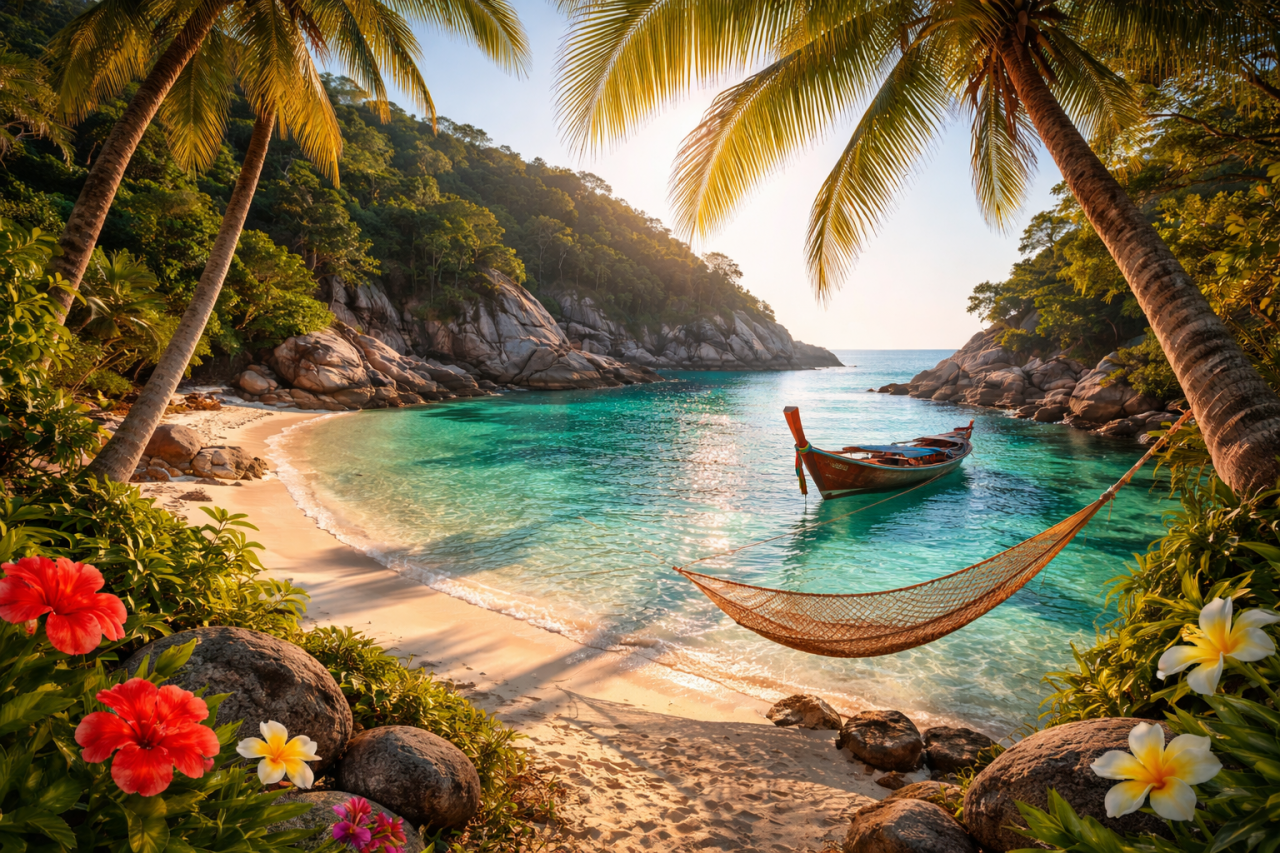
Koh Samui whispers a lot louder than it shouts. Crowded Chaweng has its parties; Lamai has its drama. But slip past the poster beaches and you’ll find a pocket of calm where coconut palms lean close, fishermen mend nets at dawn, and the sand seems to remember your name. This is about that hidden place — the quieter corners of Koh Samui that feel like a discovery even if the island has existed for centuries.
Why Samui feels like a secret
You hear the long-tail engines first — a rhythmic clack that becomes oddly comforting. Then the scent of grilled satay at dusk. Then the warm sand under your toes. Samui’s “secret” isn’t one spot; it’s a pattern of small, tucked-away beaches, temples behind rubber trees, and restaurants that serve southern Thai food like it’s been passed down from your neighbor.
Best time to visit: December to April for sun and calm sea. May to November can be wet but quieter and cheaper. Shoulder months (November, April) give you a balance of weather and value.
Getting there and getting around
The island has an airport: Samui International Airport (USM). Flights from Bangkok take about 1 hour. Ferries arrive from Surat Thani and other islands; they’re slower but scenic.
Getting around:
– Rent a scooter for freedom — expect ~THB 200–300/day. Drive carefully; hills can be steep.
– Hire a songthaew (shared pickup taxi) for short trips.
– For comfort, private taxis or car hires run ~THB 800–1500/day depending on distance.
Tip: Fill your water bottle after reaching your accommodation. Local 7-Elevens and markets sell chilled drinks everywhere.
The most beautiful hidden places to seek out
Here are specific, quieter gems that often get overlooked. For each, you can search it on Google Maps by typing the place name.
-
Laem Sor Pagoda (Wat Laem Sor): A golden pagoda at a quieter southern cape. The views are contemplative and the breeze is a balm.
You can search for it on Google Maps by typing: Wat Laem Sor. -
Secret Beach coves near Taling Ngam: Look for small sand pockets and public viewpoints along the Taling Ngam coastline. They’re great for sunset without the crowds.
You can search for it on Google Maps by typing: Taling Ngam. -
Hin Ta and Hin Yai Rocks (Grandfather and Grandmother Rocks) — late afternoon is perfect. Go early or late to avoid tour buses.
You can search for it on Google Maps by typing: Hin Ta Hin Yai. -
Thongson Bay (also spelled Thongson Bay Natural Vent) — a small, sheltered bay good for calm swimming when the wind is mild.
You can search for it on Google Maps by typing: Thongson Bay Koh Samui. -
Secret Buddha Garden (also called Tarnim Magic Garden): A hilltop sculpture garden created by a local farmer. It’s shady, mossy, and oddly peaceful.
You can search for it on Google Maps by typing: Secret Buddha Garden Koh Samui. -
Fishermen’s piers and local harbors near Bophut — go early for fish markets and a real taste of island life.
You can search for it on Google Maps by typing: Bophut Fisherman’s Village. -
Small roadside stalls and family-run restaurants in Mae Nam and Choeng Mon. The food tastes like home and the prices are friendly.
Where to eat like a local
-
Fisherman’s Village (Bophut Beach) has night markets with grilled seafood, satay, and mango sticky rice. Arrive hungry; portions are generous.
You can search for it on Google Maps by typing: Fisherman’s Village Bophut Beach. -
Kaylee Restaurant (local favorites appear in neighborhoods — if you see heavy locals and a small handwritten menu, go in). Look for places that smell like herbs and coconut milk.
Food-price cues:
– Street food and market meals: ~THB 40–150.
– Simple local restaurants: ~THB 150–300.
– Mid-range seaside dinners: ~THB 400–1000+.
Tip: Try pla pao (salt-crusted grilled fish) or gaeng som (sour curry) if you want authentic southern Thai flavors.
A simple packing checklist
- Lightweight rain jacket (for surprise showers).
- Sunscreen, hat, reef-safe if you’ll snorkel.
- Flip-flops and closed shoes for temple visits or hikes.
- Small cash stash — some tiny stalls don’t take cards.
- Portable charger and a dry bag for boat days.
Recipe-like plan for a perfect half-day hidden outing:
1. Morning: Coffee and roti from a beachside stall.
2. Mid-morning: Scooter to a quiet cove (Taling Ngam or Mae Nam).
3. Lunch: Eat where locals eat — simple curry, rice, papaya salad.
4. Afternoon: Nap under a palm or a short, shady hike to the Secret Buddha Garden.
5. Sunset: Laem Sor Pagoda or a low-key beachfront bar for the golden hour.
Practical tips & respectful travel
- Temples: Dress modestly (shoulders and knees covered). Remove shoes before entering.
- Respect fishermen’s space; don’t walk on nets or touch boats without permission.
- Bargain gently at markets; smiling works better than haggling hard.
- Water safety: Some beaches have strong currents. Swim where locals are swimming.
Final note — how to savor it
Koh Samui’s hidden beauty is a slow reveal. Walk away from guidebook pins. Let the island surprise you with a quiet bay, a family-run noodle shop, or a coconut-scented evening. Ask locals for directions — most love pointing you to a tucked-away favorite.
You’ll leave with sand in your bag, a list of dish names you can’t pronounce properly, and a quiet certainty: you found a corner of Samui that feels intimately yours.

Comments (0)
There are no comments here yet, you can be the first!