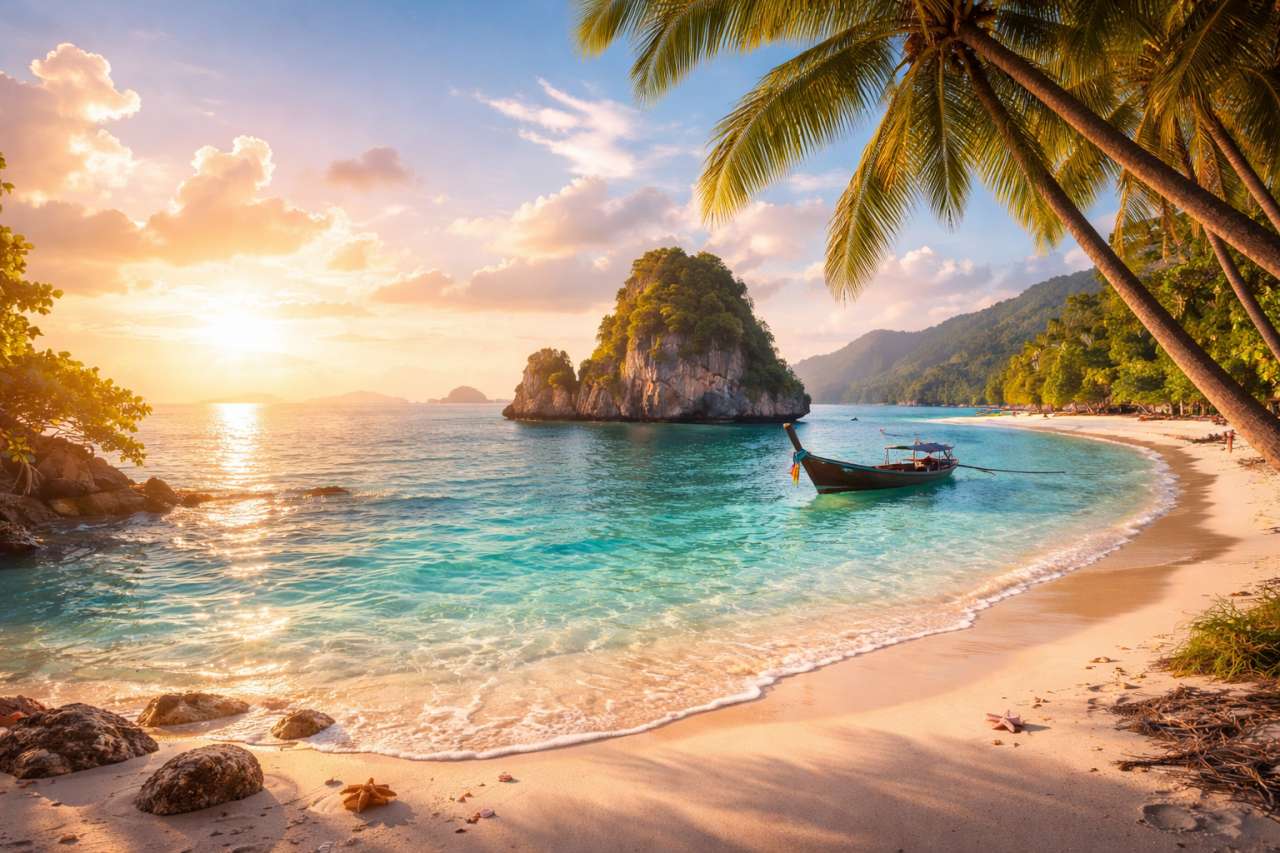
There’s a peculiar kind of disbelief that settles over you the first time Koh Samui’s shorelines open up after a twisty mountain road: sea so turquoise it seems photoshopped, palms leaning like they’ve been rehearsing their poses for decades, and an atmosphere that suggests everyone has agreed—silently, kindly—to slow down. This Samui beach feels unreal in the best way: like an old postcard you somehow walked into.
Below I’ll walk you along the sand, the food stalls and the temples, pointing out practicalities and small pleasures. Think of it as a measured stroll with the occasional aside about where to get the best grilled seafood or how to avoid the midday motorbike traffic.
First impressions: arriving and settling in
Koh Samui is accessible by plane to Samui International Airport (USM) or by ferry from the mainland. Flights can be surprisingly frequent from Bangkok and Singapore; ferries arrive at several piers depending on the route. Expect humidity, a humid breeze that smells faintly of salt and diesel, and the immediate temptation to take off your shoes.
Most visitors choose areas like Chaweng for lively beaches, Lamai for a calmer buzz, or Bophut for a village-like charm. If you want easy access to restaurants and nightlife, Chaweng Beach is a practical bet. For quieter mornings and postcard-perfect palm fronds, head to quieter coves along the island’s west coast.
Tips:
– Book transfers from the airport or pier in advance if arriving late—taxis are plentiful but prices can spike.
– Bring reef-safe sunscreen; the water here is worth keeping healthy.
The beaches: more than color, a mood
Koh Samui’s beaches are varied and worth sampling. Each has a personality, like neighborhoods in a city.
- Chaweng Beach: Long, busy, and beautifully blue. Good for swimming and people-watching, with many bars and restaurants along the promenade.
- Lamai Beach: A touch quieter with interesting rocks at the ends; you can still find lively bars and a friendly local scene.
- Bophut Beach and Fisherman’s Village: A more relaxed stretch with boutique shops and evening markets that feel village-like.
- Maenam Beach: Quieter, with views to Koh Phangan across the water and a slower tempo better for reading and long walks.
Practical swim tip: currents can be stronger than they look around some points, especially during monsoon transitions. Swim near lifeguard stations if you’re unsure, and always ask locals about current conditions.
Food and drink: charcoal grills, lemongrass, and late-night coconut sweets
Eating on Samui walks that tightrope between humble and sublime. Street stalls and seaside grills often outdo more polished restaurants for flavor.
Places and flavors to look for:
– Fresh grilled seafood skewers cooked over charcoal—smoky, juicy, and best paired with a rim of lime.
– Tom yum and tom kha soups, bright with lemongrass and galangal; these cut through the humidity.
– Mango sticky rice and young coconut (served straight from the shell) for a sweet, refreshing finish.
Where to go:
– Fisherman’s Village Walking Street in Bophut is perfect for evening strolls and trying lots of small dishes. You can search for it on Google Maps by typing: Fisherman’s Village Walking Street, Bophut, Koh Samui.
– For a local market experience, search for: Mae Nam Night Market or Lamai Night Plaza to find grilled seafood and street snacks.
Dining tips:
– Try street food from stalls that are busy—turnover means freshness.
– If you have dietary restrictions, carry a translated note; many vendors will happily accommodate simple requests.
Culture and calm: temples, views, and respectful curiosity
Koh Samui’s spiritual and cultural spots are quietly woven into the island’s tourist fabric. They reward a slow approach and a little humility.
Notable sites:
– Wat Phra Yai (Big Buddha Temple): The 12-meter golden Buddha on a small island connected by a causeway is iconic and photogenic. You can search for it on Google Maps by typing: Wat Phra Yai (Big Buddha), Koh Samui.
– Wat Plai Laem: A more colorful and playful temple complex with statues and lakes that invite slow wandering. You can search for it on Google Maps by typing: Wat Plai Laem, Koh Samui.
Temple etiquette:
– Dress modestly (shoulders and knees covered) when entering temple buildings.
– Remove shoes before entering prayer halls and keep your voice low out of respect.
Activities: sea, sand, and hidden waterfalls
Koh Samui is as suitable for gentle hedonism as it is for modest adventures. You can spend days simply hopping from beach to beach, or you can add a little active exploration.
Recommended activities:
– Snorkeling trips to nearby reefs: Ask local operators about small-group trips to quieter spots rather than large party boats.
– Mu Ko Ang Thong National Marine Park day trips for dramatic limestone islands and kayaking.
– Namuang Waterfall I and Namuang Waterfall II for a refreshing dip in jungle pools; search for them on Google Maps by typing: Namuang Waterfall 1, Koh Samui and Namuang Waterfall 2, Koh Samui.
– A sunset walk along Bophut Beach or the Chaweng promenade—both reward patience with excellent photo light and cooling breezes.
Activity tips:
– Take an early-morning tour for calmer seas and cooler temperatures.
– Pack insect repellent for jungle walks—sandflies and mosquitoes like team sports.
Getting around: motorbikes, taxis, and the “songthaew” experience
The island’s main transport options are rental motorbikes, songthaews (shared pick-up taxis), private taxis, and tuk-tuks. Each has its charm and caveats.
- Motorbike rental: The freedom is addictive, but account for narrow, twisty roads and rental-stipulated insurance rules. Wear a helmet and steady your speed.
- Songthaews: Cheap and sociable, they run fixed circuits and are a good, local-feel option.
- Taxis and private transfers: Comfortable and straightforward for airport runs or luggage-heavy trips.
Safety note: If you’re not an experienced rider, avoid motorbiking at night and in heavy rain. Roads can be slippery and visibility drops quickly.
Where to stay: moods and mattresses
Accommodation options run the gamut from simple beachfront bungalows to boutique resorts with jasmine-scented gardens.
- For lively nights and many dining options: Chaweng.
- For a quieter, more local pace: Maenam or Choeng Mon.
- For boutique charm and a village feel: Bophut (Fisherman’s Village area).
Booking tip: If you’re visiting in high season (December–March), reserve a few months ahead. For shoulder seasons, you can sometimes find last-minute bargains without too much sacrifice.
Practicalities and courtesy
A few practical notes to keep the magical feel intact:
- Cash is king at many small stalls; ATMs are widespread but sometimes charge fees.
- Tap water is not generally recommended for drinking—buy filtered or bottled water.
- Remember to haggle gently in markets; it’s expected but should be good-natured.
- Respect local customs: dress modestly near temples and refrain from public displays of disrespect toward the monarchy.
A final, unromantic but necessary note on weather
Koh Samui has a slightly different monsoon rhythm than mainland Thailand. The peak tourist season is drier and sunnier, but rains can surprise you. Even during wet months, showers are often short and dramatic—heavy and then gone—so plan a flexible itinerary and savor the green aftermath.
This Samui beach feels unreal because it manages that rare trick of being both accessible and timeless. The water tastes sharper here, the evenings smell sweeter, and the island invites you to move at a pace that’s slightly slower than you’re used to—without ever feeling abandoned. Pack a book, a light rain jacket, and a willingness to get sand in unexpected places. You’ll leave with sun-creased photos and a memory that’s less like a checklist and more like a short, well-loved story.

Comments (0)
There are no comments here yet, you can be the first!