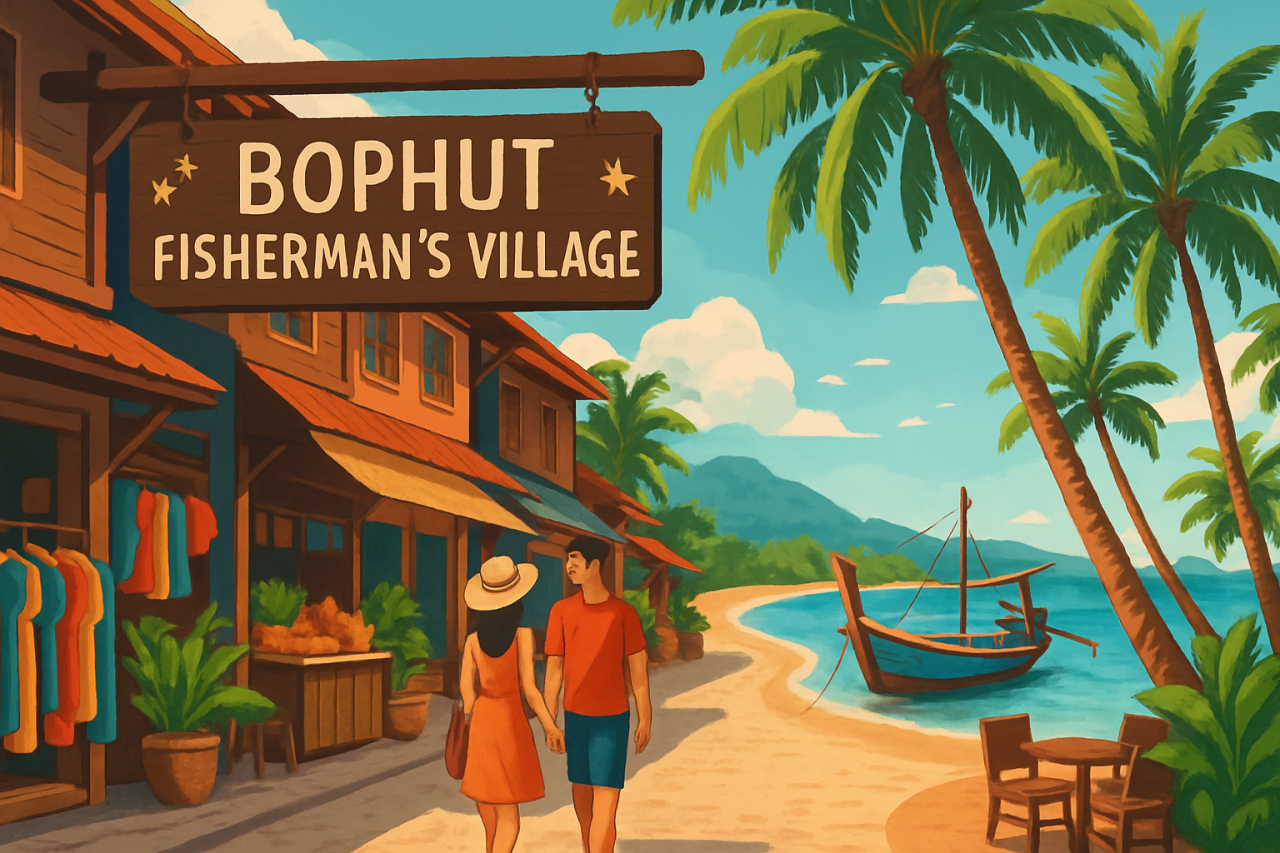
Koh Samui’s Bophut Fisherman’s Village: A Gentle Wander Through Time and Tide
There’s a certain hush that settles over Bophut Fisherman’s Village in the early morning—before the shops open their wooden shutters, before the market stalls line the old road, before the island sun has fully yawned itself into the sky. The air here carries a faint perfume of salt and lemongrass, mingled with the distant sizzle of oil in someone’s kitchen. If you let yourself drift along its narrow lanes, you’ll find Bophut is less a place you visit and more a place that quietly welcomes you, as if you’re an old friend returning home.
A Village with Stories in its Walls
Bophut Fisherman’s Village is one of Koh Samui’s most charming enclaves, a pocket of nostalgia along the island’s north coast. Once a bustling port for Chinese and Malay fishermen, its wooden shop-houses now cradle boutiques, seafood restaurants, and cozy cafes. But the spirit of the old village lingers—in the faded signs above a tailor’s door, or the slow creak of a bicycle passing by.
You can search for it on Google Maps by typing: Fisherman’s Village Bophut
Strolling the Village: What to See
The Friday Night Market
If you’re lucky enough to be here on a Friday, the village transforms into a lantern-lit festival. Bophut Fisherman’s Village Walking Street Market unfurls along the narrow main street, spilling over with stalls selling sizzling satay, mango sticky rice, hand-carved soaps, and fluttering sarongs. The air is thick with laughter and bargaining, with the strum of live music drifting from makeshift stages.
Tip: Arrive just before sunset to catch the golden light shimmering off the Gulf of Thailand, and bring small change for street snacks—you’ll want to sample a bit of everything.
The Old Wooden Pier
At the village’s heart stretches the old wooden pier, its planks weathered by decades of tides. Locals cast fishing lines into the sea, and children chase each other between the posts. Walk to the end for a view back toward the village; the jumble of rooftops and palm trees is especially beautiful in the soft evening light.
You can search for it on Google Maps by typing: Bophut Pier
The Temples Nearby
Just a gentle stroll from the village, you’ll find Wat Plai Laem and the famous Big Buddha Temple (Wat Phra Yai). Both are worth a visit for their vibrant murals, serene statues, and the quiet sense of peace that settles over you as you slip off your shoes and step inside.
You can search for them on Google Maps by typing:
– Wat Plai Laem
– Big Buddha Temple (Wat Phra Yai)
Where to Eat (and Linger)
The Hut Cafe
Ask any local for a favorite breakfast spot, and you’ll likely be pointed to The Hut Cafe. It’s a tiny place, with mismatched chairs and a chalkboard menu. Their Thai omelet is fluffy and fragrant—best enjoyed with an iced coffee as you watch the village slowly come to life.
You can search for it on Google Maps by typing: The Hut Cafe Koh Samui
Coco Tam’s
For a sunset to remember, sink your toes into the sand at Coco Tam’s. This beach bar is all open air, cushions, and swaying palm trees. Order a coconut mojito and some grilled seafood, and stay for the fire show after dark. There’s a kind of magic here, when the night is soft and the lanterns are glowing.
You can search for it on Google Maps by typing: Coco Tam’s
Gentle Reflections: The Art of Slow Travel
What I love most about Bophut Fisherman’s Village isn’t just the beauty, but the unhurried pace. There’s time to watch the fishermen mend their nets, to browse silk scarves without rush, to exchange stories with the shopkeepers whose families have lived here for generations. If you let it, the village teaches you to slow your step and savor the moment—whether it’s the tang of spicy papaya salad on your tongue or the laughter of children playing in the surf.
Practical Tips
- Getting There: Bophut is about a 15-minute drive from Samui International Airport. Taxis and songthaews (shared pick-up trucks) are easy to find, but I recommend renting a scooter if you feel comfortable—it’s the most freeing way to explore the island.
- Dress Code: Modest attire is appreciated, especially when visiting temples. Bring a shawl or light cover-up.
- Timing: Early mornings and late afternoons are the sweetest hours—cooler, calmer, and wrapped in golden light.
- Cash is King: While some places accept cards, many smaller vendors at the market prefer cash.
Farewell, for Now
As the evening settles and the lanterns flicker to life, Bophut Fisherman’s Village feels less like a tourist stop and more like the old soul of Koh Samui—a place where stories are woven into every breeze off the sea. Come with an open heart, a curious palate, and a willingness to linger. You might just find yourself returning, again and again, to this quiet corner where time drifts like the tide.
Until next time, may your travels be gentle and your memories sweet.

Comments (0)
There are no comments here yet, you can be the first!