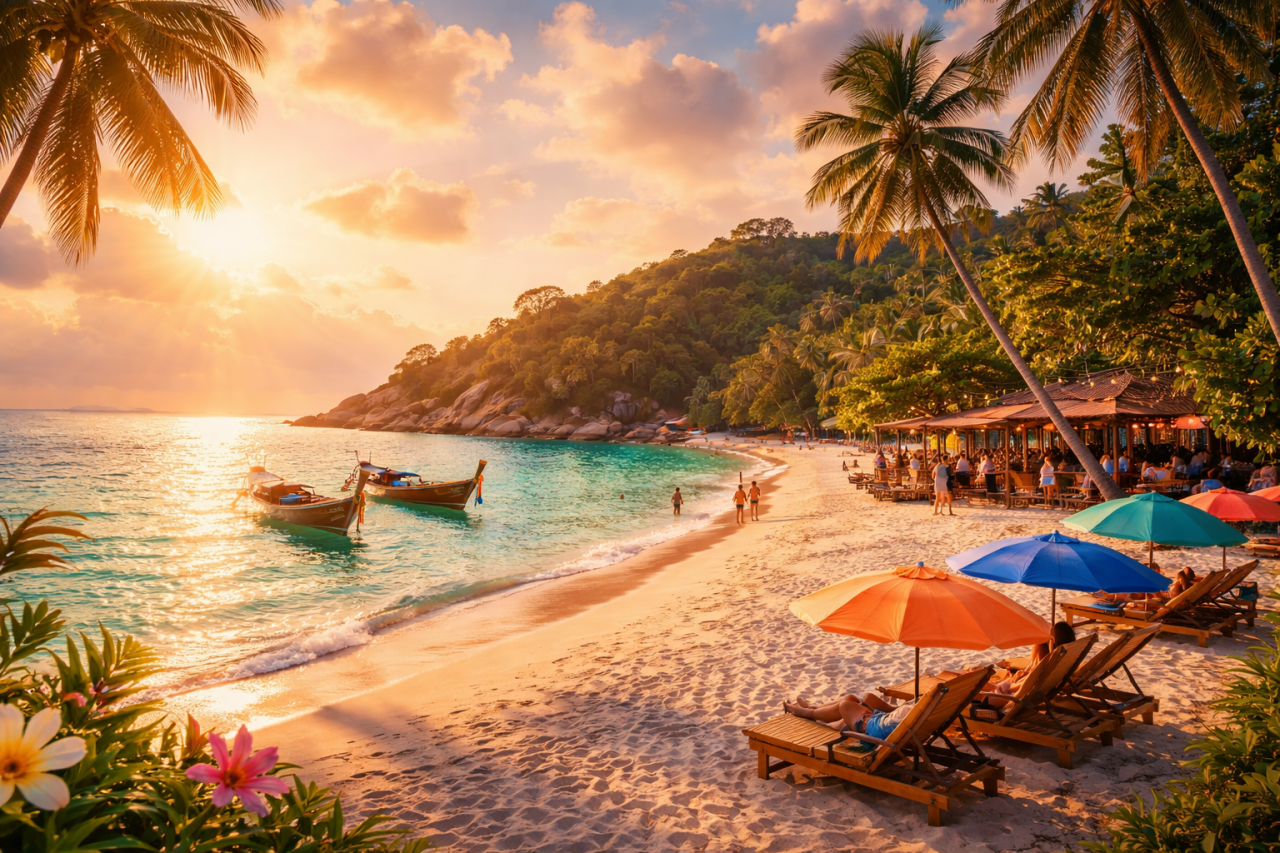
Koh Samui hits like a warm, fragrant breeze — coconut palms, long-tail engines chattering, and the sea slipping cool against sun-warm skin. There’s a beach everybody’s whispering about (and you’ll see the hordes soon), but Samui’s charm isn’t a single shore. It’s fragrant street food at dusk, a cliffside temple at sunrise, and the promise of a perfect nap in a hammock. Here’s a compact, sensory guide from someone who wants you to feel ready, not overwhelmed.
Which beach is everyone heading to?
Chaweng Beach, officially Chaweng Beach (หาดเฉวง), draws crowds for a reason. Wide arc of soft sand, clear shallow water, and a long strip of restaurants, bars, and shops. Sunsets here are dramatic — the sky goes neon and the music starts up. Expect lots of people, especially in high season. Want quieter stretches nearby? Try Lamai Beach or Choeng Mon Beach for calmer vibes.
You can search for it on Google Maps by typing: Chaweng Beach
Best time to visit Koh Samui
- High season: December to March. Dry, sunny, and busy. Book accommodation early.
- Shoulder seasons: April–June and September–October. Fewer tourists, good deals, some rain in late September.
- Low season: October to November can be wet. Fewer crowds, lower prices, but expect interruptions.
Mornings feel best. Rise early for a peaceful swim and to dodge midday heat and crowds.
Getting there and getting around
Koh Samui has an airport: Samui International Airport (USM). Direct flights from Bangkok and some regional cities make this island easy to reach. From the mainland, ferries arrive at Nathon Pier or Lipa Noi depending on where you’re coming from.
- From Surat Thani: take a bus+ferry combo or a fast ferry from Donsak Pier.
- Local transport: songthaews (shared pickup taxis) are everywhere and cheap; agree on the route — some run fixed loops. Taxis and private transfers cost more.
- Renting a scooter is the most flexible option. Helmets, common sense, and caution on narrow, hilly roads.
Search for: Samui International Airport or Nathon Pier on Google Maps.
Senses-first: what to try and when
You’ll want the clack of long-tail engines, the scent of grilled satay, and a cool drink in hand. Here’s a short checklist:
- Try: Thai coconut ice cream from a street stall. Eat it on the sand.
- Eat: Grilled prawns and green curry at a beachfront restaurant during sunset.
- Sip: A fresh coconut or a Nam Manao (Thai lime soda) in the heat.
- Hear: Local bands and DJs at Chaweng after dark, or cicadas and waves at quieter beaches.
Bring reef-safe sunscreen and a small towel. A sarong doubles as a picnic blanket and quick cover-up.
Must-see spots (short and sweet)
-
Big Buddha Temple, officially Wat Phra Yai — an iconic 12-meter golden Buddha on a small island. Sunrise photos are lovely.
You can search for it on Google Maps by typing: Wat Phra Yai (Big Buddha) -
Hin Ta and Hin Yai Rocks — quirky rock formations near Lamai Beach with a local legend and great coastal views.
You can search for it on Google Maps by typing: Hin Ta & Hin Yai Rocks -
Na Muang Waterfall 1 and Na Muang Waterfall 2 — lush, pink-granite pools for a cool swim after a short walk.
You can search for it on Google Maps by typing: Na Muang Waterfall -
Fisherman’s Village, Bophut — charming wooden shop-houses, boutique shops, and the Friday Walking Street market for food and crafts.
You can search for it on Google Maps by typing: Fisherman’s Village Bophut -
Secret Buddha Garden (also called Tarnim Magic Garden) — tucked up in the hills with statues and jungle paths. Go in the cooler part of the day.
If you’re not sure about exact locations, type the full place name into Google Maps.
Food notes: where to eat and what to order
Samui does seafood well and street food better. Here are a few practical tips:
- Don’t miss: Som Tam (green papaya salad) for a punchy, sweet-spicy kick.
- Try: Massaman curry on a rainy evening for comfort and warmth.
- Markets: Chaweng Night Market and Fisherman’s Village Walking Street serve a variety of quick, delicious bites.
- Splurge: Book one sunset dinner at a beachfront restaurant on Chaweng or Choeng Mon for views and atmosphere.
Price cues: street food 40–120 THB per dish; mid-range restaurants 200–600 THB; high-end dining higher. Cash is handy in markets.
Simple itinerary (48 hours)
Day 1
1. Early swim on Chaweng Beach.
2. Lunch of grilled seafood. Nap.
3. Late afternoon visit to Wat Phra Yai for golden-hour photos.
4. Dinner at Fisherman’s Village and stroll the night market if it’s Friday.
Day 2
1. Morning scooter ride to Na Muang Waterfall for a dip.
2. Lunch in Lamai — relax on Lamai Beach.
3. Sunset at Hin Ta and Hin Yai Rocks.
4. Night out on Chaweng if you want music and dancing.
Treat the schedule like a recipe: swap ingredients, keep it light, savor.
Practical tips and safety
- Cash and cards: Many places accept cards, but small stalls prefer cash.
- Water: Buy bottled water or use filtered water at reputable hotels.
- Health: Apply reef-safe sunscreen and stay hydrated. Mosquito repellent at dusk.
- Respect: Dress modestly at temples. Remove shoes and cover shoulders.
- Driving: If you rent a scooter, ensure you have an international driver’s license or valid local permit and wear a helmet.
Final sensory snapshot
Walk barefoot, feel warm sand between your toes, and hear the tide’s slow rhythm. Grab a skewer, eat where the locals do, and catch a sunset that flattens everything into a perfect postcard. Koh Samui moves at island pace — friendly, immediate, and never overpolished. Chaweng might be everyone’s next hotspot, but the whole island still keeps secrets for the curious.
Happy packing. Don’t forget the sunscreen, a sense of curiosity, and the little notebook for random street-food discoveries.

Comments (0)
There are no comments here yet, you can be the first!