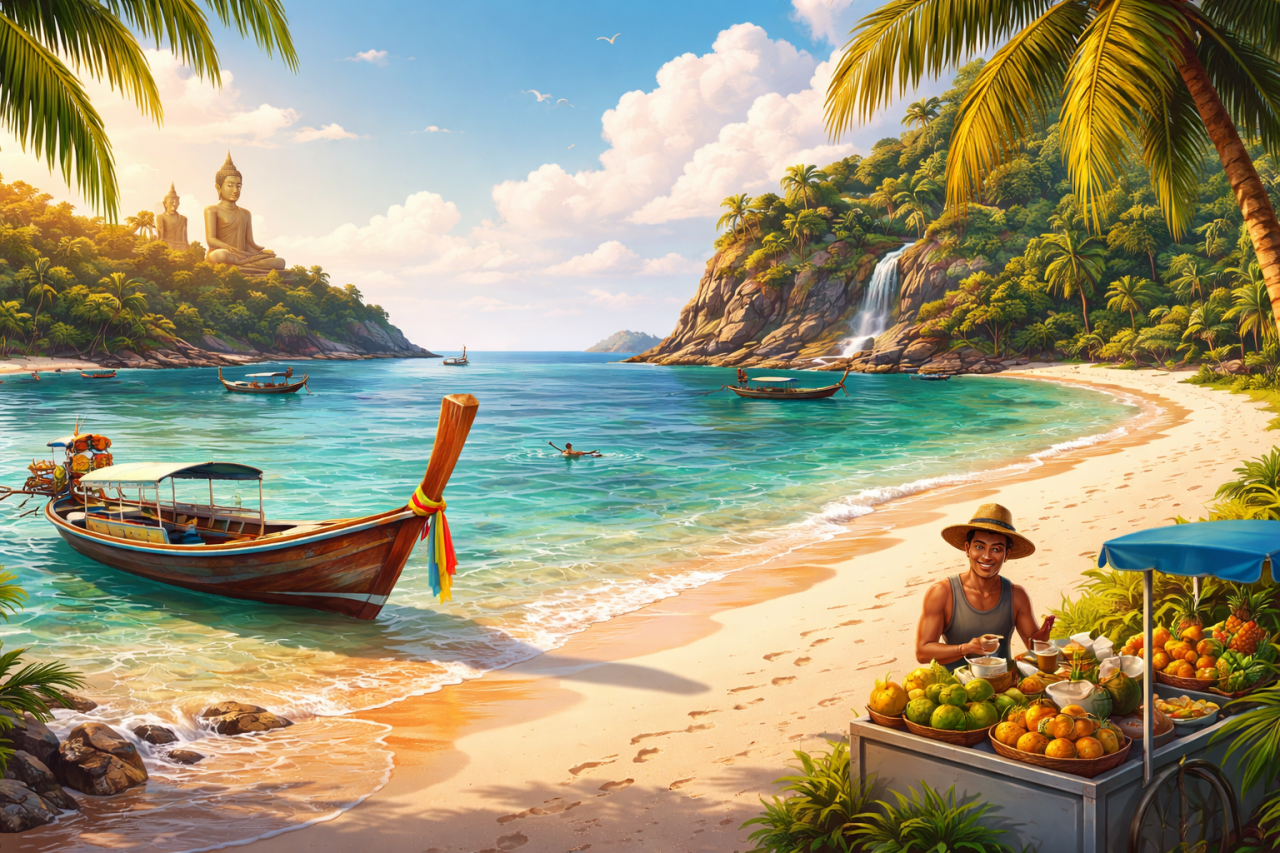
Koh Samui smells like grilled fish and coconut oil in the morning. Light hits the palm fronds at an angle that makes every leaf a tiny lantern. I arrived expecting postcard beaches and tropical clichés. Instead I found textures: the coarse grit of early-morning sand, the cool ceramic tilt of temple tiles, and the soft hum of scooters forming a shifting soundtrack.
First Impressions: Not Just Beaches
Chaweng Beach is wide and lively, with a mix of families, backpackers, and sunset chasers. The sand is finer toward the center and grainier nearer to the shore, where little shells crunch underfoot. Expect vendors selling fresh sugarcane juice in clear plastic bags—squeeze and sip while you stroll.
Lamai Beach feels quieter and a touch more rugged. The shoreline rocks up against hidden coves you can spot from the main road. Walk toward the rocky headlands to find small patches of solitude with big views.
Practical tip: arrive at beaches early, before 9:30 a.m., for cooler sand and softer light. Vendors set up later; mornings are for sea and silence.
Temples and Unexpected Calm
Wat Phra Yai (Big Buddha Temple) commands a hill with a 12-meter gilded Buddha statue. The view over the sea is surprisingly panoramic, calm, and a little theatrical. Shoes off, shoulders covered, and speak softly—this is as much a community place as a tourist stop.
Wat Plai Laem is a short drive from the Big Buddha. It’s quieter, with intricate statues and reflective ponds. The sound of small bells and the scent of incense make the grounds feel like a miniature festival of devotion.
Search tip: You can search for it on Google Maps by typing: Wat Phra Yai (Big Buddha Temple, Koh Samui) or Wat Plai Laem.
Food: Fresh, Fragrant, and Full of Stories
Local markets shape much of the island life. The Fisherman’s Village Walking Street in Bophut fills with chatter, clinking plates, and the scent of grilled seafood on market nights. Try grilled mackerel or a plate of pad Thai finished with lime and crushed peanuts.
For a quiet meal, take a recommendation from a guesthouse host and try local family-run eateries. The smell of cumin and char reveals itself before the dish appears. Sit where the air breezes through—plates cool, conversation warms.
Quick dining tips:
– Ask for “mai phet” (not spicy) or “pet nit noi” (a little spicy) if you worry about heat.
– Try a fresh coconut—the water is crisp, cool, and instantly revitalizing.
– If you’re vegetarian, say “jin” and follow local guidance; many places can adapt dishes.
Getting Around: Scooters, Taxis, and the Rhythm of the Road
Renting a scooter is the most freeing way to explore. The roads can be up-and-down, so keep your speed measured and watch for sudden curves. Helmets are a must for safety and for dealing with dust and salty spray.
Alternatively, songthaews (shared red trucks) and taxis operate across the island. Haggling gently is normal; do it with a smile. A polite local host will often tell you which driver is fair and reliable.
Practical safety tip: photograph the front and side of your scooter before you ride and take a quick video of the meter or agreement if you’re using a taxi.
Hidden Corners and Slow Moments
Secret moments came from small detours. Drive past the main road signs and take the little laneways, especially on the east coast near Maenam. You’ll find coffee shops with mismatched chairs and sea views that feel private.
Sunrises at Choeng Mon are hushed and cool. The sand is thin and the tide retreats like a slow, polite neighbor. The light is pale and forgiving—bring a camera with a wide lens and a habit of pausing.
Local-host tip: ask your guesthouse owner where they like to go for a quiet cup of coffee. Their favorite place is often the one they recommend for a real morning.
Wellness and Quiet: Spas, Yoga, and Slow Breathing
Koh Samui is scattered with wellness centers that range from intimate studios to resort spas. Morning yoga classes by the sea smell faintly of ocean and sunscreen. Massages are rooted in technique and rhythm; a good therapist will ask about aches and listen.
Be respectful: speak softly as you enter, remove your shoes as requested, and follow staff guidance on modesty and privacy.
Practicalities: When to Visit and What to Pack
Best times: December to March for clearer skies and most reliable beach weather. April to June offers fewer crowds but hotter, more humid days. Monsoon season (roughly September to November) brings dramatic weather and lower rates.
Pack list essentials:
– Lightweight, breathable clothing and a light rain jacket.
– Reef-safe sunscreen and a reusable water bottle.
– Comfortable walking shoes for temples and rocky outcrops.
– A small respectful shawl for temple visits.
Money tip: ATMs are common in main towns, but smaller shops and local markets prefer cash. Withdraw a reasonable amount in one go and keep some small notes for tips and market purchases.
A Few Local Courtesies
- Dress modestly when visiting temples—cover shoulders and knees.
- Remove shoes where requested and lower your voice in sacred spaces.
- Use your right hand when passing items or giving money; it’s considered polite.
- Smile. A sincere smile opens doors faster than a heavy bag.
Final Thoughts: Slow Down and Notice
Koh Samui surprised me by being both lively and quietly insistive about stillness. It asks you to slow your stride, breathe in coconut and salt, and pay attention to small acts: a vendor flipping fish, a monk’s measured step, a local pointing out a perfect viewpoint. Trust those local conversations. They will lead you to the island’s truer corners.
If you want to find specific places, search by name on Google Maps—start with Chaweng Beach, Lamai Beach, Wat Phra Yai (Big Buddha Temple), Wat Plai Laem, Fisherman’s Village Walking Street, and Choeng Mon Beach. Each name is a little promise of texture, scent, and the sorts of surprises that led me to write: I didn’t expect this from Koh Samui.

Comments (0)
There are no comments here yet, you can be the first!