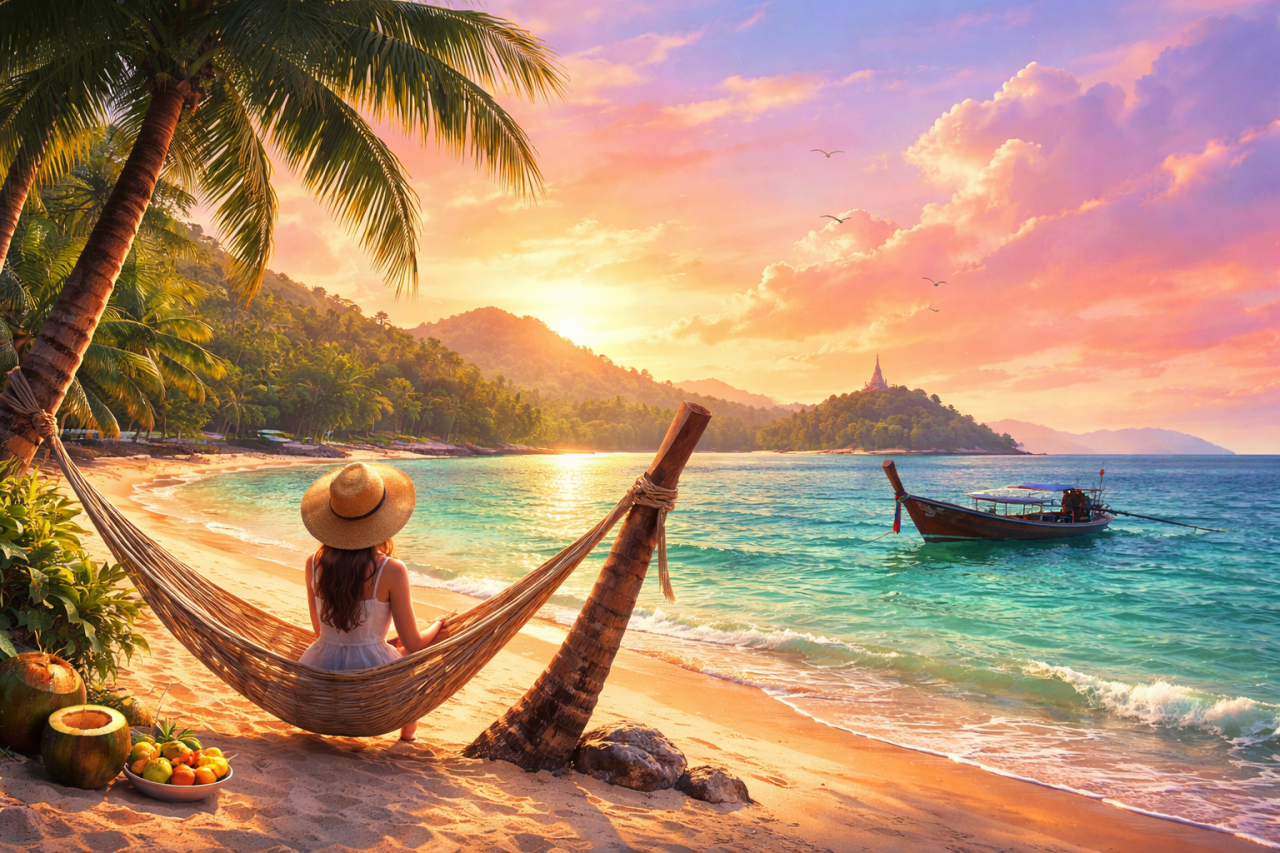
Koh Samui hits you first in the small things: the salt on your lips, the banana-leaf steam from a street food stall, the slow sway of palm shadows at noon. It’s bright, easy, and full of tiny discoveries. After a few days wandering beaches, temples, and markets, I finally understand the draw: Samui is effortless magic carved into coconut groves and coral.
First impressions: arrival and orientation
Flying in or coming by ferry both feel amiable. Samui’s small airport, Samui International Airport, is compact—walk across the tarmac and you’re already outside. If you arrive by sea, be prepared for the friendly bustle at Nathon Pier.
Practical tip: get a local SIM at the airport counter or a convenience store; coverage is solid and makes navigating much smoother. Rent a scooter if you’re comfortable riding—traffic is calmer than in Bangkok, but bring sunscreen and a good level of focus.
Beaches to linger on
- Chaweng Beach: the most lively stretch of sand. Expect soft white sand, a long shoreline, and plenty of bars and eateries within easy reach. It’s great for swimming and people-watching.
- Lamai Beach: a notch quieter, with dramatic rocks at the eastern end. Walk the shoreline at low tide and look for little tide pools filled with curious fish.
- Maenam Beach: calm, family-friendly, and ideal for long, slow walks. The view across the water to Koh Phangan is especially lovely at sunset.
- Bophut Beach and Fisherman’s Village: cobbled streets meet beachfront dining. The atmosphere at night is relaxed—think string lights, wooden decks, and grilled seafood.
Try this at sunrise: walk Chaweng’s east end when the light is thin and gold. Vendors will start brewing coffee around 6:00–6:30 AM, and the sea smells like clean salt and green mango.
Temples and quiet moments
Wat Phra Yai (Big Buddha Temple): the 12-meter golden Buddha statue is visible from across the water. The climb up is short but lined with souvenir stalls and quiet shrines—dress respectfully (shoulders and knees covered).
Wat Khunaram: home to the mummified monk. It’s a contemplative stop—calm and sobering. Keep your voice low and take time to read the plaques explaining his teachings.
Tip: arrive at temples in the morning to avoid crowds, and remove shoes before entering indoor sanctuaries. A lightweight scarf works great for quick coverage.
Food that pulls you back for seconds
Street food is the heartbeat of Samui. Look for stalls with steady lines—they’re a good sign. Try:
- Pad Thai: watch for the wok toss and the final spritz of lime.
- Khao Yum (southern Thai rice salad): fragrant with herbs, dried shrimp, and shredded coconut.
- Grilled seafood: ask for fish or prawns with a side of spicy seafood dipping sauce (nam jim seafood).
For a specific spot, visit Fisherman’s Village Night Market for an array of stalls and local dishes. You can search for it on Google Maps by typing: Fisherman’s Village Night Market.
Insider note: when a dish is labeled “phuket” or “southern style,” expect lime, shallot, and heat. Ask for “mai ped” if you want less spice.
Nature and gentle adventure
Secret Buddha Garden: a hillside garden of statues and shaded paths. It’s cooler under the trees and great for a slow, exploratory stroll away from beachfront crowds.
Na Muang Waterfall 1 and Na Muang Waterfall 2: set your expectations for slippery rocks and bright purple dragonflies in the spray. Wear sturdy sandals and leave time to climb a bit for panoramic views.
For snorkeling: head to the coral spots off Koh Taen or Koh Mudsum for clearer water and fewer day-trippers. Ask local long-tail operators about morning trips when visibility is best.
Practical packing: bring reef-safe sunscreen and a small dry bag for your phone. The island is sunny and wet in quick cycles—light rain jackets fold down to nothing and earn their space.
Where to stay (vibes, not brands)
- For lively nightlife and easy restaurants, stay near Chaweng.
- For relaxed, family-friendly pace, choose Maenam or Bophut.
- For quiet solitude and nature, look at the hills around Lamai or the jungle slopes inland.
Small boutique guesthouses often feel warm and personal. If you want a pool and privacy, a hillside villa can give gorgeous views and a quiet morning routine of coffee and birdsong.
Responsible travel on Samui
Coconut trees and coral are fragile. Use refillable water bottles where possible and say no to single-use plastics when you can. Support local businesses—buy mango sticky rice from a stall rather than a chain café.
Respect local customs: when visiting temples, speak softly, cover shoulders and knees, and don’t climb on statues for photos. If you hire an elephant or animal encounter, check credentials and prioritize ethical sanctuaries.
Practical tips and quick logistics
- Currency: Thai baht (THB). ATMs are common in busy areas; carry some cash for markets and remote stops.
- Transport: tuk-tuks and red songthaews run routes—confirm the price before hopping in. Scooter rentals are cheap; bring an international driving permit if you plan to ride.
- Best time to visit: December–March for drier weather and calm seas. April–June is hot; September–October sees more rain and fewer crowds.
- Health: tropical bites are a thing—pack insect repellent, a small first-aid kit, and any meds you need.
Final thoughts: small rituals that make Samui sing
Buy a sack of fresh mangos at the market and eat them on the beach until your fingers are sticky. Take two slow mornings for nothing but hammock time. Chat with a vendor about where they grew their coconut—people love to talk about food.
Samui’s charm isn’t one big show. It’s a collection of small, generous moments: the sound of waves against a fishing boat at dusk, a clerk handing you change with a smile, the scent of lemongrass from a nearby kitchen. These add up, quietly, until you understand why so many people fall a little bit in love with this island.
Useful searches on Google Maps:
– Samui International Airport
– Nathon Pier
– Chaweng Beach
– Lamai Beach
– Maenam Beach
– Bophut Beach and Fisherman’s Village
– Wat Phra Yai (Big Buddha Temple)
– Wat Khunaram
– Fisherman’s Village Night Market
– Secret Buddha Garden (Suan Buddha)
– Na Muang Waterfall 1
– Na Muang Waterfall 2
Go with curiosity, bring a reusable water bottle, and try this at sunrise: stand on a quiet stretch of sand, breathe deep, and count off five things you didn’t know about Thailand before you landed.

Comments (0)
There are no comments here yet, you can be the first!