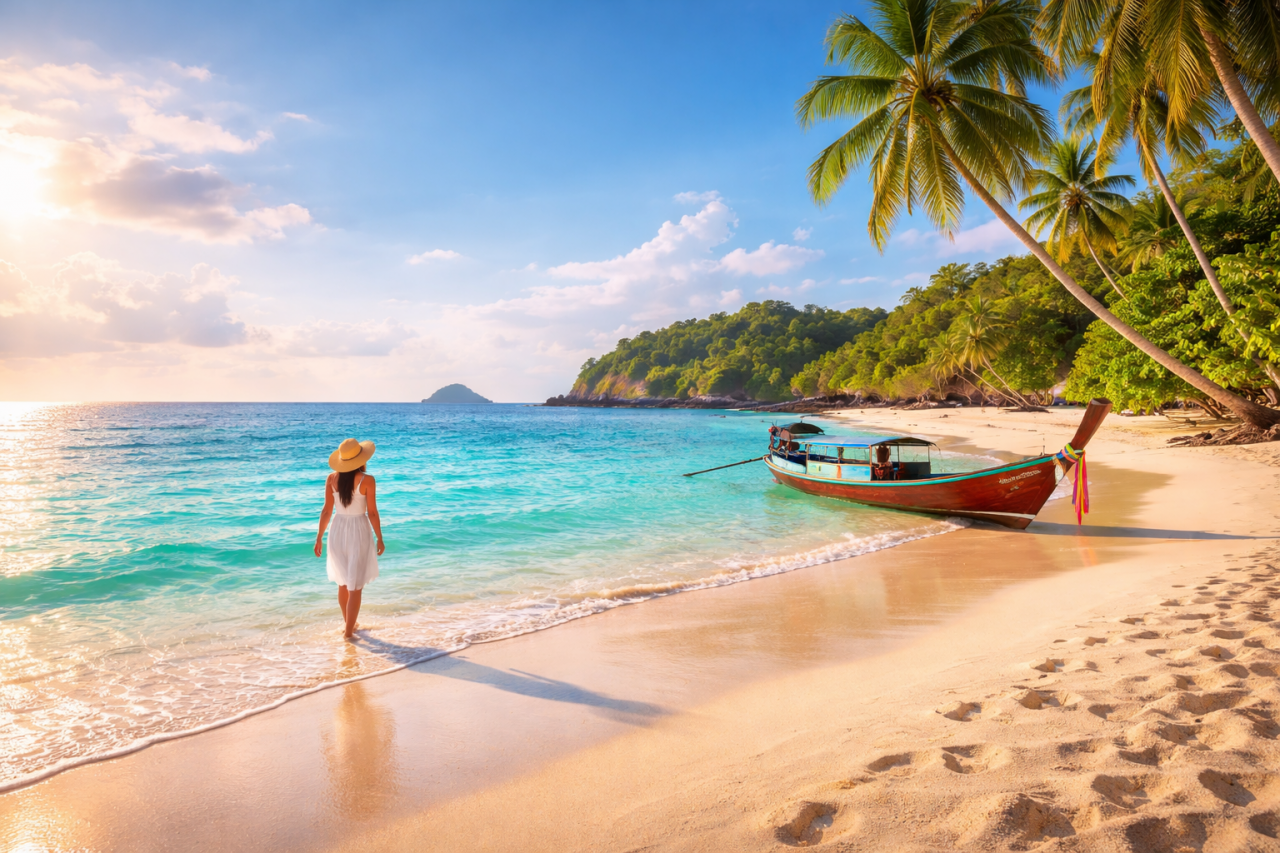
There’s a kind of disbelief you get the first time you step onto Chaweng Beach on Koh Samui — the water a clear tropical blue, the sand so soft it seems imported from a travel-magazine dream. I remember thinking, half-joking, “Is this place photoshopped?” The island has a way of feeling both perfectly curated and effortlessly lived-in, like someone swept a postcard across real life and left it there.
Below are impressions, practical tips, and little notes that help make the island usable rather than just pretty. Read it like a gentle walk: stop to breathe in the salt and jasmine, then take a useful step or two.
Getting to Koh Samui
Koh Samui is an island off the east coast of Thailand’s Gulf, reachable by air or ferry. Most visitors arrive by plane into Samui International Airport (USM), a compact and convenient gateway with flights from Bangkok, Phuket, and international destinations.
If you prefer sea travel, ferries run from the mainland (Surat Thani and Don Sak) and nearby islands (including Koh Phangan and Koh Tao). Ferries vary by operator; if you’re bringing a vehicle, check for car-transport options ahead of time.
Practical tip: Domestic flights can be frequent but pricier; ferries take longer but make for scenic arrivals. Book at least a day in advance during high season (December–March).
Beaches That Make You Squint
Koh Samui has a variety of beaches, each with a distinct personality. Here are a few to know by name.
- Chaweng Beach — The busiest and most polished stretch, with a long curve of powdery sand, lots of bars, and a lively night scene. You can search for it on Google Maps by typing: Chaweng Beach.
- Lamai Beach — Slightly quieter than Chaweng, Lamai mixes relaxed beach time with local seafood restaurants and a few lively bars. Search for: Lamai Beach.
- Bophut Beach and Fisherman’s Village — A more sedate option with a charming, slightly retro village vibe and a row of restaurants along the sand. Search for: Bophut Beach and Fisherman’s Village.
- Mae Nam Beach — Calm, family-friendly, and perfect for watching wide sunsets without crowds. Search for: Mae Nam Beach.
- Silver Beach (Haad Thong Ta-khian) — A small, sheltered cove with clearer water and good snorkeling off the rocks. Search for: Silver Beach Koh Samui or Haad Thong Ta-khian.
Practical tip: If you want privacy, hunt for smaller coves or come early in the morning when everyone else is still sipping coffee.
Temples and Quiet Culture
Temples on Samui give a softer, spiritual counterpoint to the beach bars. Respect is simple: shoulders covered, skirts or trousers at least knee-length, and remove shoes inside most sacred buildings.
- Wat Phra Yai (Big Buddha Temple) — The 12-meter seated Buddha is visible from the northeastern shore and is a popular stop for first-time visitors. Search for: Wat Phra Yai (Big Buddha).
- Wat Plai Laem — A colorful, contemporary-looking temple featuring a large Guanyin statue and ornamental lakes. Search for: Wat Plai Laem.
Cultural note: Temples can be lively with markets and incense, not silent sanctuaries. Take the atmosphere as part of the experience rather than expecting solemn quiet.
Food: From Charcoal Grills to Jasmine Tea
Samui’s food scene feels honest and immediate: charcoal grills along the roadside, tiny family-run restaurants, and surprisingly refined hotel dining rooms. Street food tends to be the most rewarding — fresh seafood grilled to order, bowls of tom yum that snap with heat and lime, and mango sticky rice with such fragrant coconut milk it makes you close your eyes.
Recommended local meals to try:
– Grilled seafood (pla rong): seek out small shacks near the beach for the sweetest, simplest renditions.
– Khao soi and southern-style curries: the island picks up southern Thai influences; don’t miss them.
– Fresh tropical fruit and fruit shakes: mango, dragon fruit, and pineapple are reliably stellar.
If you’re hunting for specific places, ask your hotel or search for restaurants in the beach area you’re staying in (e.g., Chaweng, Lamai, Bophut) — locals will often point you toward the best family-run spots.
Food tip: Dinner times can be later than you expect. Locals often eat after sunset, and many of the best stalls only fire up in the evening.
Getting Around the Island
Samui isn’t huge, but it’s bigger than it looks when you’re on a scooter.
- Scooter rental: The most popular and flexible option. Helmets are usually provided, but check the condition. Drive carefully — roads can be winding and motorbike accidents are not uncommon.
- Taxis and songthaews (shared pickup trucks): Useful for short hops or if you prefer not to ride. Negotiate fares up front if there’s no meter.
- Car rental: Good for families or groups, especially if you plan to explore waterfalls and interior hills.
Safety tip: If you rent a scooter, buy basic travel insurance that covers motorcycle incidents and verify your policy terms carefully.
Nature Beyond the Beach
Koh Samui’s interior hills, waterfalls, and viewpoints reward a slower kind of travel. Na Muang Waterfall (Na Muang 1 and Na Muang 2) has purple-tinged rocks and small natural pools that are pleasant for a cool dip. The island’s viewpoints — like Lad Koh Viewpoint near Chaweng — offer panoramas that make the effort of a short hike worthwhile.
Search for: Na Muang Waterfall and Lad Koh Viewpoint if you want to look them up on Google Maps.
Ecology note: Respect the natural environment — don’t remove coral or shells, and bring home your litter. The island’s ecosystem is resilient but not indestructible.
Nightlife and Markets
If you’re in the mood for nightlife, Chaweng’s walking street and bars deliver energy and variety; for something gentler, Bophut’s Fisherman’s Village hosts a popular night market with craft stalls and seafood grills.
- Fisherman’s Village Walking Street — A mix of souvenirs, street food, and live music. Search for: Fisherman’s Village Walking Street, Bophut.
- Chaweng Night Market and bars — Close to the main stretch and open late for food and drinks. Search for: Chaweng Night Market.
Market tip: Bring cash. Many small vendors prefer baht over cards, and bargaining is part of the dance with small souvenir stalls.
Practicalities and Local Respect
- Weather: The high season runs December to March, with drier and sunnier days. The monsoon season brings heavier rains (typically September–November), which can affect ferry schedules.
- Money: ATMs are common in main towns, but smaller villages and markets may be cash-only.
- Respectful behavior: Dress modestly at temples, remove shoes when requested, and be mindful when photographing locals (ask first).
Mindful travel note: Tourism is a primary income source here. Support local businesses, eat at family-run restaurants, and choose tour operators who practice responsible wildlife and natural-area stewardship.
Final Thoughts — Why Samui Feels “Real”
Koh Samui has polished edges, yes, but what makes it feel honest is the seams: the charcoal smoke from a roadside grill, an elderly couple walking along a quiet stretch of sand at dusk, the slightly crooked sign over a neighborhood restaurant that serves the best curry you’ll have all week. It’s an island that can look like a postcard and still hold the small, human moments that make travel matter.
If you find yourself thinking, “This can’t be real,” take a breath of ocean air, walk a lane away from the busiest stretch, order something from a family stall, and let the place prove its authenticity quietly — in salt, in laughter, and in the slow, generous rhythm of island life.

Comments (0)
There are no comments here yet, you can be the first!