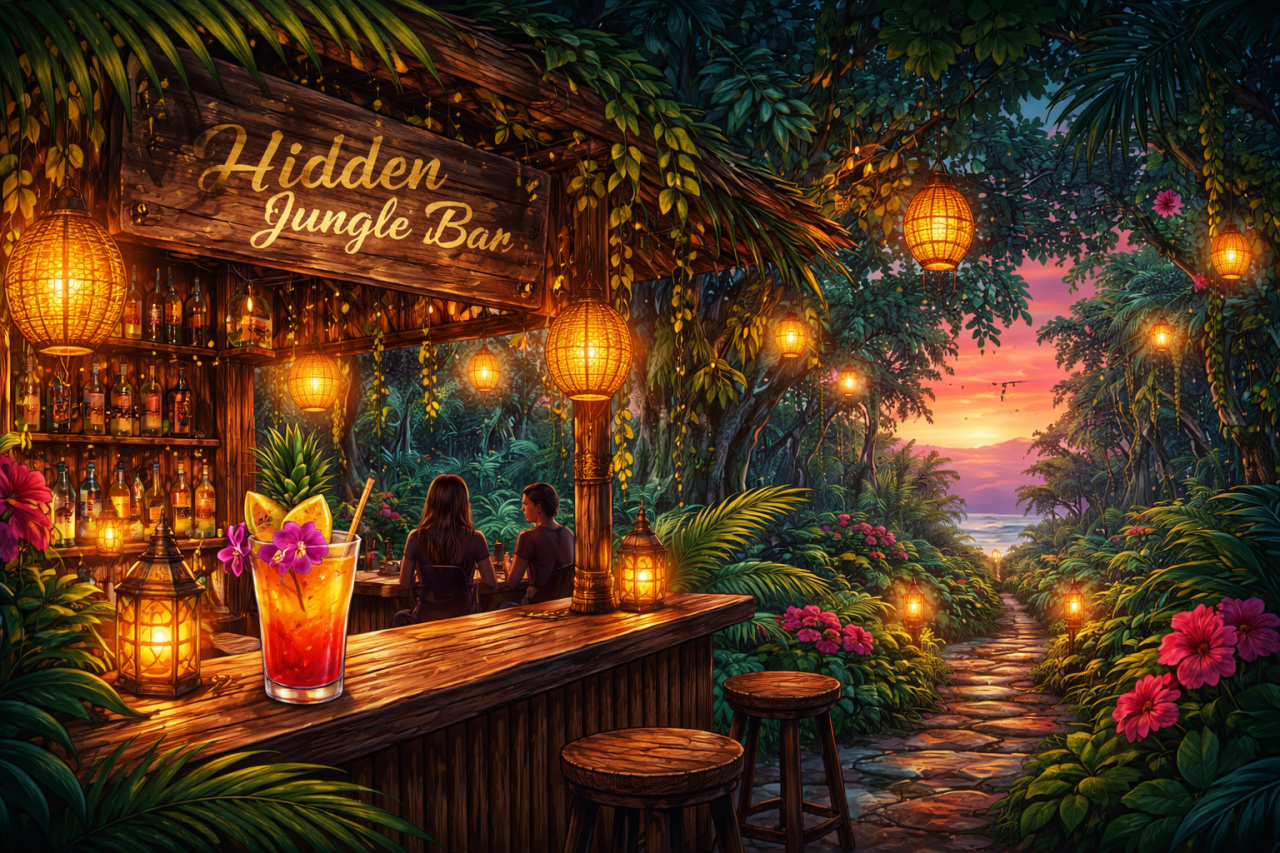
Koh Samui has a way of slipping under your skin — soft limestone cliffs, coconut palms that seem to sigh, and evenings scented with jasmine and charcoal grills. I went looking for a quiet corner and found a small jungle bar tucked behind a cluster of bungalows that felt more like a secret belonging to the island than a business. It turned out to be the kind of place that rewires your expectations about Samui: less neon, more night air and the occasional cricket concerto.
How I Found the Bar (and Why You Might Want To)
The bar sits off a minor road, shaded by thick trees that keep the heat at bay even after noon. There’s a low, half-hidden terrace with mismatched wooden tables and lanterns that look as if they’ve been collected from three continents and a few generations of islanders.
The crowd was deliciously mixed: backpackers with sun-strawled shoulders, expats nursing slow conversations, and a couple who seemed to be celebrating nothing in particular. The music was low, mostly vinyl or acoustic sets, and the cocktails were fashioned from local ingredients — lemongrass, tamarind, and the kind of fresh lime that makes your face notice it’s alive.
Practical tip: if you want to catch live music, arrive after 7:30 pm. Weekends are livelier, but weeknights often have the most soulful sets.
Why the Setting Matters
What made the place stand out wasn’t just the bar itself but how it sat in the landscape. The jungle here is not a Hollywood set; it’s humid and fragrant, full of bird calls and the occasional rustle indicating a monitor lizard’s leisurely commute. Lanterns threaded through the trees make the darkness readable rather than blank, and bamboo screening offers a film of privacy without cutting you off from the island’s sounds.
A sensory note: there’s always a hint of sea salt on the breeze, even when the bar is several hundred meters inland. That’s Koh Samui for you — an island that refuses to let the sea go entirely.
What to Order (and What to Expect)
Menu highlights leaned local and honest.
- Cocktails: Try a tamarind margarita or a lemongrass gin sour if you want something that won’t pretend to be continental.
- Beers: Local Singha or Chang alongside a small selection of craft imports.
- Food: Grilled seafood, papaya salad (Som Tam), and small sharing plates with charred scallions and smoky soy dips.
Service is friendly but unhurried — you’re not on an island timed to a train schedule. Treat that as part of the charm.
Tip: Cash is often king in smaller establishments. Bring some Thai baht, though many places accept card for larger tabs.
Nearby Sights to Make a Day of It
One of the pleasures of this bar was how easy it was to stitch a whole afternoon and evening around it.
- Chaweng Beach: The island’s liveliest stretch of sand, with plenty of restaurants and shops. You can search for it on Google Maps by typing: Chaweng Beach.
- Lamai Beach: A bit quieter than Chaweng and good for long walks, especially at low tide. You can search for it on Google Maps by typing: Lamai Beach.
- Big Buddha (Wat Phra Yai): The 12-meter seated Buddha is iconic and peaceful at sunrise or sunset. You can search for it on Google Maps by typing: Wat Phra Yai (Big Buddha).
Cultural reminder: When visiting temples such as Wat Phra Yai, dress respectfully — shoulders and knees covered — and remove shoes where directed.
How to Get There
Koh Samui is compact but traffic can be slow, especially around Chaweng. Depending on where you stay:
- Motorbike: The most flexible option; roads are generally well maintained but ride defensively.
- Songthaew (shared taxi): Cheap and charmingly communal, just flag one down along main roads.
- Private taxi or ride-hailing apps: Easier with luggage or if you prefer air-conditioning.
Safety note: If you rent a motorbike, check insurance and wear a helmet. The island’s curves are beautiful, but they’re unforgiving at speed.
Respecting the Island
Koh Samui balances tourism and tradition in ways that sometimes feel fragile. Small acts matter: carry a reusable water bottle, refuse single-use plastics when possible, and ask before photographing people up close. Locals are warm when treated with courtesy.
If you’re staying in a bungalow or homestay near jungle bars, keep noise reasonable after 10:00 pm; island nights are for listening as much as for partying.
A Few Final Observations
There’s a difference between a bar that aims for novelty and one that grows quietly into its role as a community place. This jungle bar did the latter: its personality arrived from the people who frequented it, the island produce on the menu, and the way the trees took care of the lighting.
If you go, slow your pace. Sit at the edge of the terrace where the air feels like an old friend, order something with lemongrass, and let the night assemble itself. Koh Samui will give you the sea and the sky, but places like this give you the smell of a good evening and the memory of one to keep.
Where to search on a map: If you want to find the exact bar I visited, try searching local phrases like “jungle bar Koh Samui” or “hidden bar Koh Samui” on Google Maps — the island has several delightful hideaways and word of mouth often points you to the best one.

Comments (0)
There are no comments here yet, you can be the first!