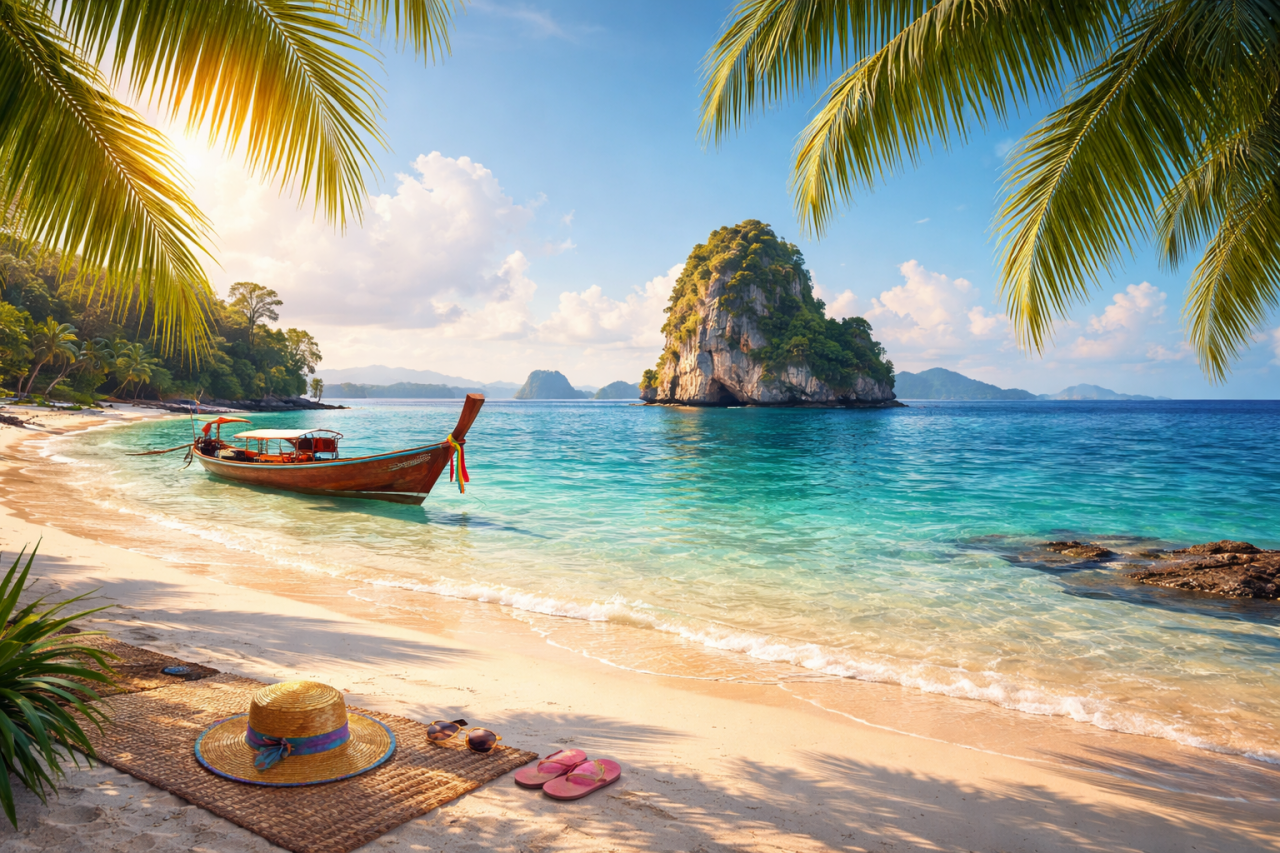
Koh Samui has a way of settling into the quieter parts of your attention. The island’s shores are not just backdrops for postcards; they are a sequence of small revelations—the way early light slips through coconut fronds, the sound of a longtail returning with its day’s catch, the particular shade of tide pooled in a coral shelf. One beach has been collecting more of those glances lately, drawing visitors and conversation in equal measure. This is a short look at that place and the island that holds it, with practical notes and a steady watchfulness for how to be present while you’re there.
Where the buzz started
The beach people are talking about sits on the quieter side of Koh Samui’s coastline, a place where sand narrows and local boats lie low. It isn’t a brand-new discovery—locals have known of its curve and shade for years—but a few images and stories passed online have pushed it into wider view. That shift is familiar: a beach moves from private rhythm to public notice overnight when someone photographs the right light.
If you’re trying to find it, you can search for it on Google Maps by typing: “Mae Nam Beach” and then walk south or north along the shore—small coves and unexpected pockets of sand appear if you let your feet lead you. Allow time; the best parts of a coastline reveal themselves slowly.
Getting there and getting around Koh Samui
Koh Samui is compact enough that travel planning can be gentle, but the island’s roads require a steady eye. Rent a scooter only if you are confident with two wheels and hill turns. If not, use a metered taxi or a songthaew (shared truck taxi) for short hops.
- From Samui International Airport, taxis and private transfers take about 20–30 minutes to the main beaches, depending on traffic.
- If you prefer public comfort, there are regular ferries to the mainland at Donsak Pier, or you can arrive by ferry to Nathon Pier on Koh Samui.
- For mapping, search on Google Maps by typing: “Samui International Airport (USM)” and “Nathon Pier” to orient yourself.
Bring a paper map or an offline map app; when the sun is right and you stop for photos, phone batteries have a way of draining fast.
When to go and what to expect
The clearest weather tends to fall between December and April, with calm seas and long stretches of sun. May to October brings more rain and a changing light that can be dramatic—storm clouds build fast and the sea becomes a different color entirely.
Mornings are quieter. Walk at dawn and you will have sand to yourself more often than not. Afternoons bring families and local vendors selling grilled fish and iced coffee. If you prefer solitude, plan for early or late in the day.
Nearby sights worth the slow attention
Koh Samui’s rhythm is stitched together by small places you step into rather than grand gestures.
- Big Buddha Temple (Wat Phra Yai): A short drive from the northern beaches, this is a place of straightforward devotion. You can search for it on Google Maps by typing: “Wat Phra Yai (Big Buddha Temple) Koh Samui”. Walk slowly, observe respectfully, and notice how incense smoke hangs in the morning air.
- Hin Ta and Hin Yai Rocks: These rocks on the south coast are a local landmark; people come for the curious shapes and the views. Search: “Hin Ta Hin Yai” on Google Maps to find the exact spot.
- Fisherman’s Village, Bophut: A strip of wooden shops and restaurants along the water that holds a different pace in the evening market. Search for “Fisherman’s Village Bophut” on Google Maps.
Each of these places rewards a patient look: a carved lintel, a shopkeeper arranging goods, the exact tilt of a roof against sky.
Eating and drinking: modest pleasures
Food on Koh Samui favors freshness and directness. Fish is usually as honest as the tide, and curries are made to pair with rice rather than to overwhelm.
- For seafood that reads of the sea it came from, try the local beachside restaurants that offer daily catches, often grilled simply with lime and sea salt.
- For coffee and a place to sit quietly, Fisherman’s Village has a few small cafés where you can watch fishermen mend nets or tourists come and go.
- Street food stalls in the evening—try a mango sticky rice or a simple pad Thai—are low-cost and revealing of local taste.
When you sit to eat, notice how plates arrive and are cleared, how people move through the rhythms of service. Food is a conversation in itself.
Respectful visiting: a few practical notes
The island is small and fragile in ways you can touch—coral that bleaches under careless feet, trash that gets blown into quiet bays. Your presence makes a difference.
- Take reusable water bottles and refuse single-use plastics where possible.
- When swimming near coral, keep your distance; wear reef-safe sunscreen.
- Dress simply at temples: cover shoulders and knees, remove shoes when asked, and speak quietly.
These acts are small and accumulate into a different kind of visit—one that leaves the place more like you found it.
A short list of useful tips
- Cash is common. ATMs work in the main towns but can run slow; keep small bills for market purchases.
- Power: many guesthouses provide adapters, but a small power bank is a quiet relief at the end of a day of photos.
- Language: a few Thai phrases—khop khun (thank you), sawasdee (hello)—go a long way. People appreciate the attempt even when it’s halting.
Bring patience with you; waiting is part of travel here. A delayed ferry, a missed bus, a sudden rainstorm—these are the openings for unexpected observations.
Leaving with more than photographs
Koh Samui hands you its particulars rather than its headline. The island is not a single image but a set of small facts: the exact shade of tide pooled in a rock hollow, the cadence of a vendor calling prices, the soft hush of palms at dusk. If the beach that has gone viral brings you, let it be a beginning rather than the sole purpose of your visit.
Search for places slowly, listen to people, and keep room for the kind of quiet that isn’t always photogenic. You’ll return with more than an image: a few new habits, a better sense of how sea and day interact, and the memory of a coastline that is, if you pay attention, quietly patient in its revelations.

Comments (0)
There are no comments here yet, you can be the first!