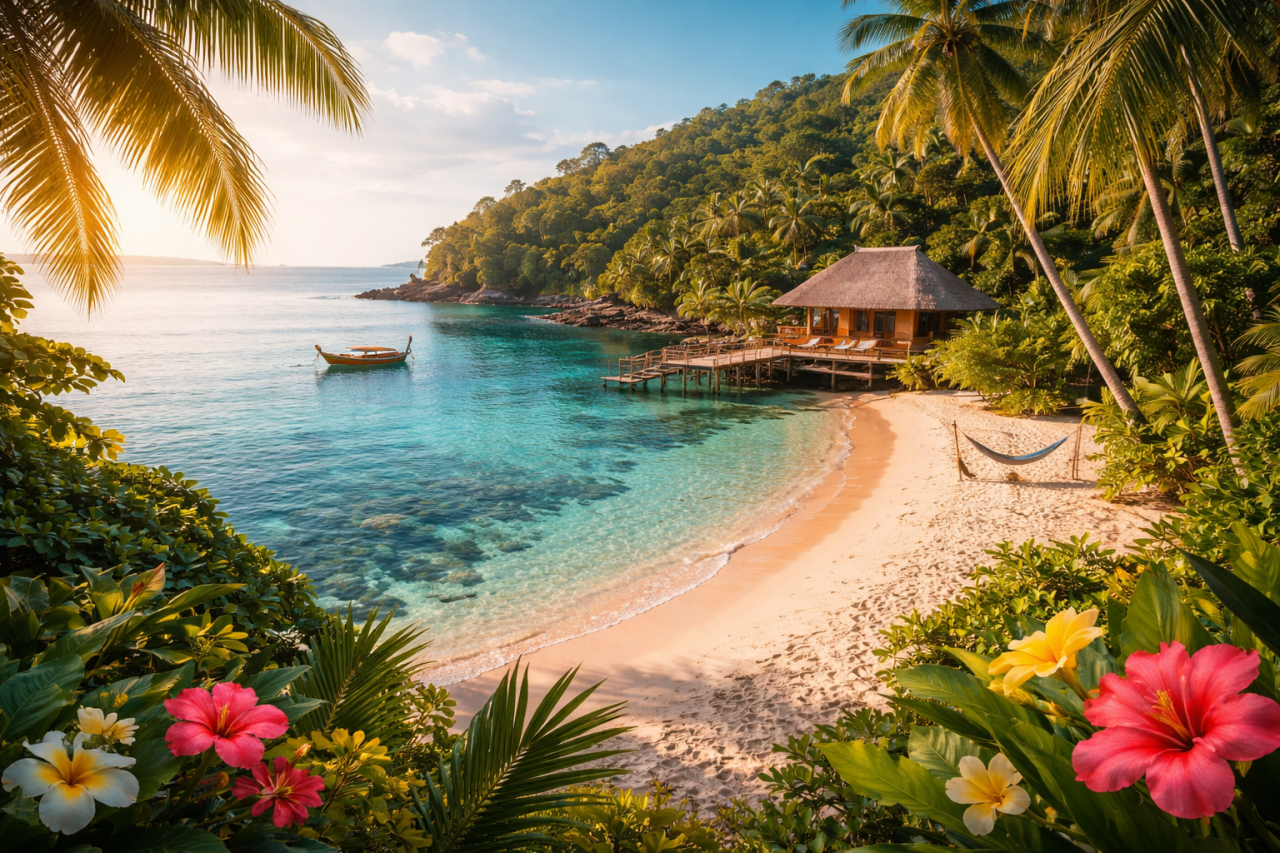
There is a particular way the light arrives on Koh Samui at first breath of morning—flat, pale, and patient. The boats are still silhouettes, the palms are arranged in quiet practice, and the tide keeps its small, honest rhythm. I like to begin there, beside a cup of strong coffee and the salt on my shirt, because a place shows its manners first thing. Koh Samui has many faces, and one of them is intimate in the way a small cove holds conversation.
Arrival and first impressions
You notice the change before you step off the ferry: a relief in the air as if humidity has been pared back to usefulness. The island is green in a particular, uninsistent way—coconut palms, tamarind, and the odd tamarind-splashed hill. Where you land matters. Nathon Pier speaks of commerce and local rhythm, while the ferry points toward the softer edges of Chaweng and Lamai.
A practical note: ferries and flights arrive at different points, and transport can take time if the sun is high. If you want to preserve that early hush, plan to reach your accommodation before late afternoon, and ask for a room with a shaded veranda.
A quiet cove that feels private
There are small bays on Koh Samui where the world narrows to the sound of water and a single table under a tree. One of these is the lesser-known stretch between Bophut Beach and Chaweng Noi—not entirely secret, but often overlooked by itineraries that sprint from beach bar to beach bar. Here, the sand is coarser, the palms bend with history, and the swimmers are fewer.
What makes a spot feel private is not seclusion alone but scale and attention: a handful of sunbeds, a fisherman’s boat pulled up at one end, a restaurant with a single row of tables. Approach these places with the same gentleness you would bring to someone’s home. Leave nothing but footprints. Take only photographs and the light you remembered as you left.
Tip: Search for local coves by typing “Bophut Beach” or “Chaweng Noi Beach” into Google Maps to see nearby smaller beaches and access points.
Moving slowly: how to spend a day
I recommend a day that resists schedules. Begin before sunrise if you can.
- Dawn walk: Walk along the sand as the light lays itself flat. You’ll notice the first vendors arranging fruit and the fishermen bringing in nets if you are near a working beach like Bophut Fisherman’s Village.
- Breakfast: Choose a small seaside cafe; even simple congee is made with care. At the very least, have strong coffee and a plate of fresh mango.
- Mid-morning: Rent a scooter for exploration if you’re comfortable driving. The island yields small temples and viewpoints when you’re not in a hurry.
- Afternoon: Find a shaded spot, read, nap, or swim. If you prefer company, a modest beachfront restaurant will do—ask for the catch of the day.
- Evening: Head to a quieter stretch for sunset. The sky there is never showy; it lets you watch.
If you plan to visit Bophut Fisherman’s Village, you can search for it on Google Maps by typing: Bophut Fisherman’s Village. It’s a useful place to learn the day’s rhythms and find a meal that feels local.
Where to find calm, respectfully
There are a few places where calm is almost a practice, and they require a small offering of attention from visitors.
- Wat Phra Yai (Big Buddha): A temple with a 12-meter seated Buddha that steadies the view from the north coast. It is busy at times, but the architecture and quiet corners repay a slow walk. Search on Google Maps: Wat Phra Yai (Big Buddha).
- Secret Buddha Garden (also called Tarnim Magic Garden): Higher up on the island, this place feels like a private altar to green things. The road is narrow; go in daylight and bring water.
- Local markets: Arrive early. The smells, the colors, and the bartering are best before noon.
When you visit temples, dress with respect: shoulders and knees covered, shoes off at the proper thresholds. Silence is a kind gift.
Food and the small rituals of eating
Food in Koh Samui is a daily negotiation between heat, salt, and citrus. Curries and coconut milk are not exotic here—they are the grammar of the island. Try dishes where fish is the subject rather than an accent: steamed fish with lime and chili, or a simple grilled snapper with sticky rice.
Recommendations by name are useful; you can search for them on Google Maps if you want to be precise:
– The Fisherman’s Village area (Bophut) for a range of seaside restaurants—search: Bophut Fisherman’s Village.
– Local beachside stalls along Lamai and Chaweng for quick, honest meals—search: Lamai Beach or Chaweng Beach.
A practical tip: drink bottled water, and if you eat from street vendors, choose stalls that are busy with locals—turnover is a simple safety signal.
Getting around: a cautious friendliness
Renting a scooter will give you access to small coves that feel private, but the roads can be steep and curving. Drive with the same patience you give a narrow trail. If you are not confident on two wheels, use metered taxis or arrange a driver for a half-day.
A few logistical notes:
– Fuel stations are easy to find near main roads.
– If you take a songthaew (shared truck taxi), confirm the route and price before you climb on.
– Plan extra time for transfers: the island is deceptively small until you encounter traffic or a narrow hill.
On preserving the quiet
Places that feel private stay that way when visitors treat them as participants in a community, not as an audience. That means disposing of waste properly, not playing loud music at the water’s edge, and respecting fishermen’s gear. If a local asks you to move or to lower your voice, it is not a rebuke but an invitation to learn the rhythm of the place.
When you buy from a small vendor, you sustain a person’s morning. When you leave a beach as you found it, you leave a room for someone else to arrive.
Practical travel tips
- Best seasons: November to April tends to be drier; the monsoon months are greener and quieter but can close roads.
- Currency and ATMs: There are ATMs in Chaweng and Nathon, but carry cash for remote spots and market purchases.
- Health: Sunscreen, a hat, and insect repellent are small investments that keep days honest.
- Connectivity: Mobile signal is good in most built-up parts; some coves have patchy service—consider that part of the charm.
Final thoughts
Koh Samui is often described by its surfaces—the curve of a bay, the bustle of a market—but what endures is a quieter geography of habit and humility. If you attend to that geography with modest curiosity, the island will offer the sort of privacy that is really just permission: permission to slow, to listen, to notice the small work of tides and palms.
Search on Google Maps for places mentioned like “Bophut Beach,” “Chaweng Noi Beach,” “Wat Phra Yai (Big Buddha),” and “Bophut Fisherman’s Village” when you want directions. Bring patience, bring respect, and let the island remind you that intimacy is often the sum of small, repeated courtesies.

Comments (0)
There are no comments here yet, you can be the first!