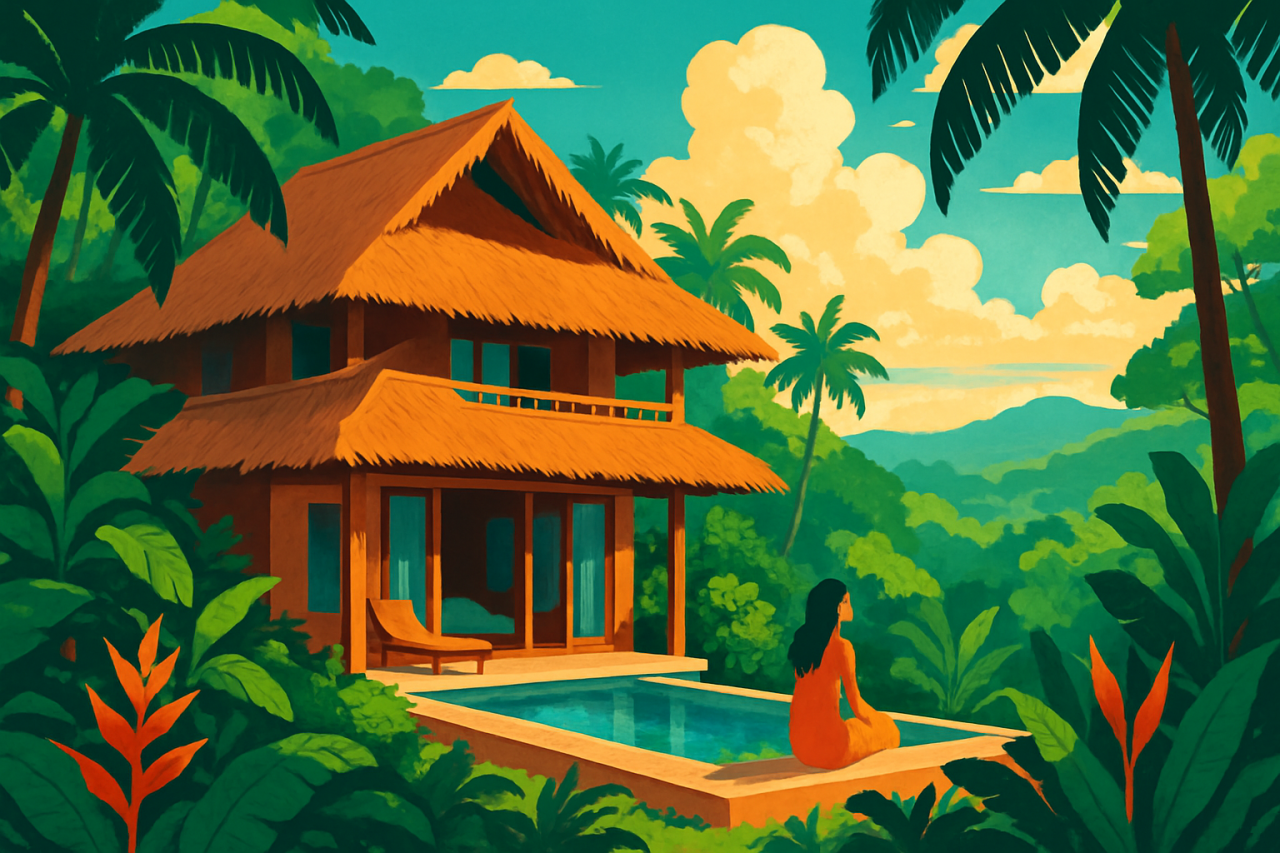
What It’s Like to Stay in a Jungle Villa in Samui: A Symphony of Cicadas and Sea Breezes
Arrival: Between Land and Sea
Arriving in Koh Samui is a study in contrasts: the gleaming white marble of Samui International Airport’s pavilions soon gives way to winding, palm-lined roads, where the air is thick with the scent of frangipani and possibility. Most visitors make a beeline for the beaches—Chaweng Beach or Lamai Beach, for instance, where the sand is fine as sifted flour and the cocktail menus run as long as Russian novels. (You can search for them on Google Maps by typing: Chaweng Beach or Lamai Beach.) But I was after something a bit different.
My destination lay inland, up a steep, serpentine road that did its best impression of a rollercoaster. Here, among the verdant folds of the island’s mountainous spine, I found my temporary home: a jungle villa, perched on stilts, with the Gulf of Thailand glinting in the distance.
The Villa: Glass, Wood, and Greenery
“Jungle villa” is a phrase that conjures all manner of Indiana Jones fantasies, but in Samui, it’s more an invitation to live inside a Rousseau painting for a while. My villa was a delicate fusion of glass and polished wood, its wide windows framing a riot of banana palms, flame trees, and the occasional, impudent macaque. At dusk, the hills came alive with the chorus of cicadas—a sound both hypnotic and, at first, mildly alarming, until I surrendered to its rhythm.
The architecture here isn’t merely aesthetic; it’s defensive, too. The raised platforms keep you above the reach of wandering critters who, like most Samui residents, are highly opportunistic. My advice: keep your snacks inside and your shoes upside down. You never know what might fancy a midnight treat—or a nap.
Mornings in the Canopy: Coffee and Contemplation
There is a particular pleasure in waking up to the light filtered through a jungle canopy. The air is cool and damp, and the only alarm clock is a persistent gecko, who seems to have read too many motivational quotes. My mornings began with local coffee—strong, smoky, a little gritty—sipped slowly on the balcony as the island shook itself awake. Below, the valley steamed gently, the ocean beyond shifting from pewter to turquoise as the sun climbed.
If you’re the sort who likes a little activity with your caffeine, you might take a walk down to Wat Plai Laem, a temple complex famous for its towering statue of Guanyin. (You can search for it on Google Maps by typing: Wat Plai Laem.) Temples in Thailand are not merely places of worship but living mosaics of belief and community, and this one—painted in improbable hues—seems to float above its pond like a lotus dream.
Days: Between Hammock and Adventure
Jungle villas are the natural enemy of productivity. It’s tempting to spend the heat of the day alternating between the hammock and the plunge pool, reading a book that’s been gathering dust since the last holiday. And why not? The villa’s design encourages a kind of deliberate slowness, a recalibration of pace.
That said, when the urge for adventure strikes, Samui is full of possibilities. Hire a scooter (pro tip: go easy on the curves, as the roads can be treacherous after rain), and head for Hin Lad Waterfall. The walk to the falls is more of an amble than a trek, shaded by ancient trees and serenaded by hidden streams. (You can search for it on Google Maps by typing: Hin Lad Waterfall.) Pause for a coconut ice cream from a roadside stall—refreshment, Thai-style, is an art form.
Evenings: Eating Like a Local (Or Trying To)
Evenings in the hills are marked by a sudden coolness and the scent of something grilling. If your villa has a kitchen, you might try your hand at a simple Thai curry, ingredients procured from a market like Samui Fresh Market in Nathon. (You can search for it on Google Maps by typing: Samui Fresh Market.) Or, wander down to a local eatery such as Supattra Thai Dining, known for its exquisite seafood and understated charm. (You can search for it on Google Maps by typing: Supattra Thai Dining.)
Dining out in Samui is less about formality and more about flavor. Expect to share your table with a few friendly stray cats and, occasionally, a neighbor eager to practice their English. The conversation, like the food, is often spiced with laughter and a touch of mischief.
Final Reflections: The Luxury of Stillness
To stay in a jungle villa in Samui is to court a particular kind of luxury—the luxury of stillness. Here, the boundaries between indoors and outdoors blur; geckos and butterflies become housemates, and the days stretch lazily, unconcerned with deadlines or digital pings.
You begin to notice the small things: the way the rain drips from one leaf to another, or how the clouds catch on the mountain tops like wool on a fence. It’s a reminder that travel, at its best, isn’t about checking off sights, but about realigning oneself with the world’s quieter rhythms.
So, if you find yourself drawn inland on this storied Thai island, consider swapping the sunlounger for the symphony of the jungle. After all, as the Thais say, “Mai pen rai”—never mind. The cicadas will sing you to sleep either way.

Comments (0)
There are no comments here yet, you can be the first!