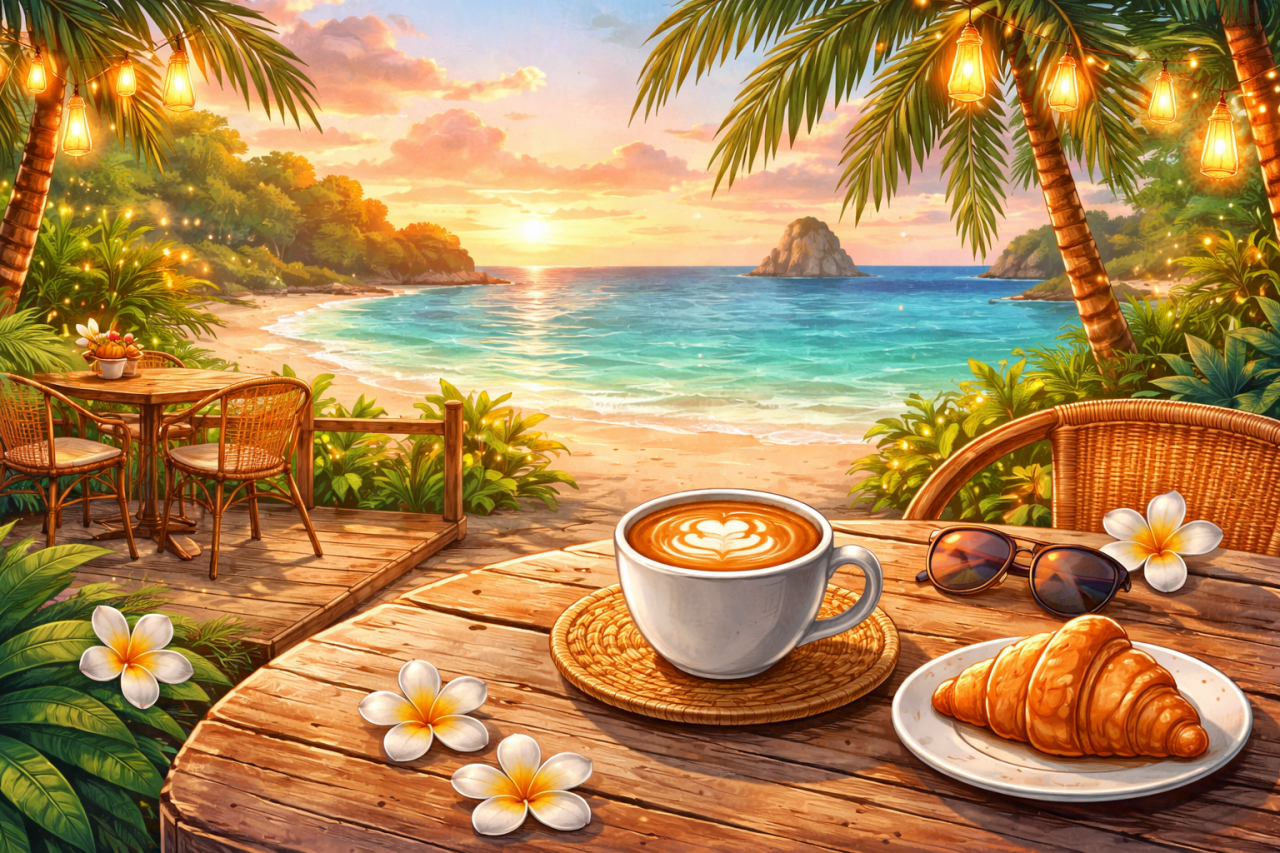
The hum of scooters and the soft slap of waves. I ducked into a shaded courtyard and found sunlight slanting through palm fronds onto a chipped ceramic cup. That first sip felt like an island welcome. Read on for the route, the tastes, and small tips to make a short Samui stop feel full.
First impressions: Koh Samui senses
The smell of salt and lemongrass greets you at the pier. Wear sandals you can kick off quickly. Move slowly; a few extra minutes breathing island air almost always uncovers something worth keeping.
The light changes fast here — early mornings are pearl, late afternoons are honeyed. Time your wandering for those softer hours so photos and memories both look better.
The café that stopped me
Waves murmur nearby. I walked toward a cluster of low buildings and found a café tucked behind a banana grove. The concrete walls were cool under my palms and a dog lay in a sun patch. Order something cold and local, like Thai iced tea or a coconut shake. Sit on a low bench and watch the neighborhood fold around you.
You can search for it on Google Maps by typing: “Koh Samui café” if you want to explore cafés near your location. Don’t expect menus in perfect English everywhere; point, smile, and try a local recommendation. Remember to bring cash — smaller cafés sometimes skip card machines.
Beaches worth the stroll
The whisper of waves at Chaweng Beach is bright and lively. Expect long stretches of sand, vendors selling grilled corn, and easy access to bars. It’s great for people-watching and an energetic swim.
Lamai Beach carries a quieter rhythm. It has rocky points to explore and simple seafood shacks that do grilled fish with lime and chili. Wear water shoes if you plan to scramble over rocks.
Bophut Beach keeps a fishing-village calm. The Fisherman’s Village night market (you can search for it on Google Maps by typing: “Fisherman’s Village, Bophut”) is an easy evening plan. Try small stalls for coconut pancakes and fresh juices.
Temples and quiet corners
The sound of bells at Wat Phra Yai (Big Buddha Temple) feels ceremonial, even in a selfie. The giant golden Buddha watches over northern Koh Samui and is quick to visit if you need a culture pulse. Dress respectfully: shoulders and knees covered.
Wat Plai Laem blends color and water. Statues and a pond create a contemplative space that’s lively with offerings. You can search for it on Google Maps by typing: “Wat Plai Laem Koh Samui”.
Walk slowly around temple grounds. Remove shoes, lower your voice, and notice small offerings that tell local stories.
Eating like a local
Sizzling pans and chili steam. Try a simple plate of khao pad (Thai fried rice) or som tam (green papaya salad) at roadside stalls for authentic flavor and low prices. Ask for “mai pet” (not spicy) if you’re unsure about heat.
Seafood is a highlight: grilled prawns, steamed fish, and chillies balanced with lime. If a place looks crowded with locals, it’s a good sign. Carry small change, and tip modestly for excellent service.
Getting around and practical tips
Scooter engines and salty wind mean you’ll see the island differently. Rent a scooter if you’re confident — helmets are essential and watch for sudden animals or potholes. If you prefer not to drive, use songthaews (shared pickups) or taxis for short hops.
Bring reef-safe sunscreen, a refillable water bottle, and lightweight rain gear in the rainy season. Keep copies of your passport and a local SIM or offline map for directions.
Mindful travel on Koh Samui
The call of a market vendor or the quiet of a temple can both demand attention. Slow down and choose one or two places to explore deeply rather than trying to tick off everything.
Respect local customs: dress modestly at sacred sites, decline plastic where you can, and ask before photographing people. Small acts keep the island friendly for everyone.
Fading light and last sips
As the sun drops, cafes and beach bars glow with warm bulbs and conversation. Order one more cooling drink, pay attention to flavors you haven’t tried, and tuck away the memory of that perfect cup.
When you leave, take a small, concrete souvenir — a recipe, a scent, a street name — and carry it back with you. It’s the best kind of travel keepsake.

Comments (0)
There are no comments here yet, you can be the first!