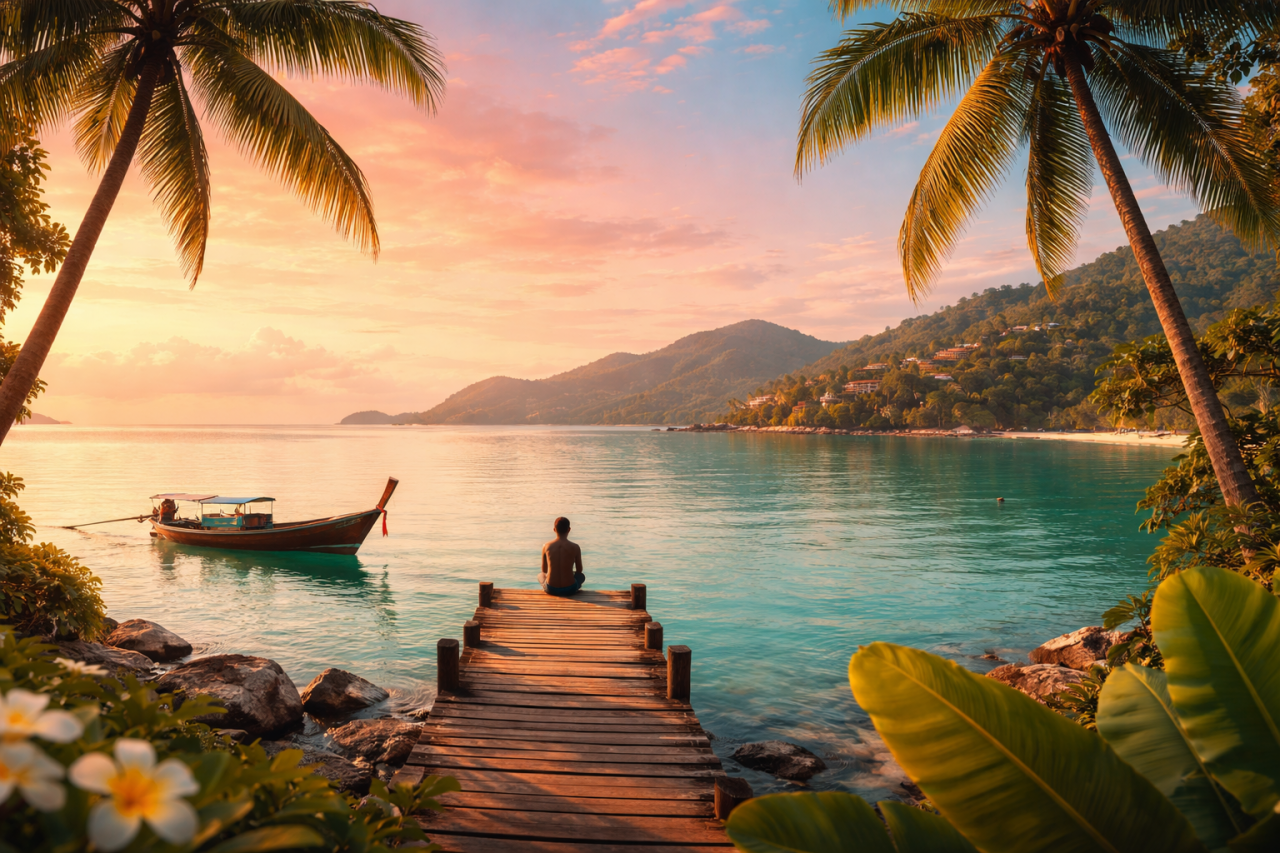
Koh Samui is the sort of place that eases you into its rhythm. The sea smells of sun-warmed salt and, sometimes, the faint smoke of a charcoal grill. Coconut palms lean like old friends offering shade; afternoons pass in a comfortable, unhurried way. “The Calmest View” could mean a literal verandah overlooking the water, or the internal hush that arrives after a day of wandering the island’s quieter corners. Either way, this guide is a friendly stroll through both kinds of calm.
Getting to Koh Samui and arriving gently
Koh Samui is accessible by air or by a combination of mainland flights and ferries. Samui Airport (also called Koh Samui Airport) has flights from Bangkok and several international points; it’s convenient and small enough to feel personal. Alternatively, take a ferry from Surat Thani on the mainland if you prefer a water approach—there’s something appropriately ceremonial about arriving by sea.
Tip: If you land at Samui Airport, ask your driver to take the scenic coastal route to your accommodation. It only adds a few minutes but starts the holiday with a proper view.
Where to place yourself for “the calmest view”
Koh Samui’s viewpoints and quieter beaches are where this island reveals its gentler face. Here are a few places to consider settling into for that restful outlook.
- Lamai Beach (หาดละไม): A long, sandy beach with a relaxed atmosphere compared with Chaweng. Walk toward the southern end for fewer sunbeds and more space to breathe.
- You can search for it on Google Maps by typing: Lamai Beach
- Maenam Beach (หาดแม่น้ำ): Known for its coconut groves and a slow, cross-island pace. The view across the water toward Koh Phangan is soft and often misted in early morning.
- You can search for it on Google Maps by typing: Maenam Beach
- Bophut Beach and Fisherman’s Village (หาดบ่อผุด และ หมู่บ้านชาวประมง): Charming evening markets, wooden shophouses, and a well-placed shore for gentle sunsets.
- You can search for it on Google Maps by typing: Fisherman’s Village, Bophut
- Ang Thong National Marine Park viewpoint: For a broader panorama that feels meditative, a day trip here rewards you with turquoise bays and karst islets.
- You can search for it on Google Maps by typing: Ang Thong National Marine Park
Practical note: “Calmest” often comes from timing as much as place. Sunrise and late afternoon between 4:00–6:00 p.m. are prime windows for quiet light and fewer crowds.
Senses and small pleasures: what you’ll notice first
The island announces itself in textures and smells. Sand between toes varies from fine to soft coral grit depending on the beach. The air at dusk carries grilling charcoal and the sweet perfume of jasmine and frangipani. Boats in the distance contribute a gentle percussion—diesel, engines idling, a distant horn—and it all ends up feeling like the island’s unhurried soundtrack.
A simple ritual to anchor a calm day: find a shady ledge, bring cold water or Thai iced tea, and watch the light move across the sea for twenty minutes. No agenda. The island rewards that.
Temples, culture, and respectful visiting
Koh Samui has several temples worth a gentle, unhurried visit. Dress modestly (shoulders and knees covered), remove your shoes before entering indoor worship areas, and ask before taking photos if a ceremony is underway.
- Wat Phra Yai (Big Buddha Temple, วัดพระใหญ่): The Big Buddha is a well-known landmark on a small island connected by a causeway. It’s serene in the early morning before tours arrive.
- You can search for it on Google Maps by typing: Wat Phra Yai (Big Buddha)
- Wat Plai Laem (วัดปลายแหลม): Not far from the Big Buddha, this temple has ornate statues and a tranquil pond that feels meditative when visited during quieter hours.
- You can search for it on Google Maps by typing: Wat Plai Laem
Tip: Visit temples early in the morning for fewer people and softer light. Keep a sarong or lightweight scarf in your bag for quick modesty.
Where to eat when you want authenticity over flash
Koh Samui has no shortage of food options, from humble beachside grills to inventive restaurants. The real magic often happens where the smell of sizzling seafood drifts from the kitchen and locals gather.
- Local beachside seafood stalls: Walk small side streets off major beaches in the evening and follow the smoke and the conversation. The freshest catches tend to be simply grilled with lime and chili.
- Fisherman’s Village Night Market (ตลาดกลางคืนหมู่บ้านชาวประมง): A rotating mix of vendors, local dishes, and sweet treats—great for grazing and sampling.
- You can search for it on Google Maps by typing: Fisherman’s Village Night Market
Eating tip: Ask for a milder level of spice if you prefer, but do try Som Tam (green papaya salad) and Tom Yum Goong (spicy shrimp soup) at least once. They taste like island memory.
Active days: snorkeling, kayaking, and gentle hikes
If calm isn’t the same as still, Koh Samui offers activities that are quietly rewarding rather than adrenaline-first.
- Snorkeling trips around the southern reefs and nearby islands reveal colorful fish without the crowds you find elsewhere.
- Kayaking in the mangroves on the northwest coast is a peaceful way to observe birdlife and the tidal rhythms.
- Na Muang Waterfall (น้ำตกหน้าเมือง): A short walk brings you to purple pools and shady picnic spots—refreshing and uncomplicated.
- You can search for it on Google Maps by typing: Na Muang Waterfall
Practical gear: Bring water shoes for rocky shorelines, reef-safe sunscreen, and a light waterproof jacket in the monsoon months.
Where to stay for that “calmest view” feel
Look for small, locally run guesthouses or boutique villas with verandahs facing the sea or gardens. They’ll often offer quieter, more personal service than larger resorts and tend to be better at preserving that lived-in, comfortable calm.
- Consider accommodations in Maenam or Bophut if you want fewer party-soaked crowds and more sunrise reading with coffee.
- If you choose Lamai, favor properties set back from the busiest stretch; the southern end is more restful.
Booking tip: Read recent reviews for noise and staffed-hours details—calm can be easily disturbed by a nearby late-night bar or inconsistent shuttle schedules.
Practical advice and local courtesies
- Currency: Thai Baht (THB) is used everywhere; many small vendors prefer cash. ATMs are common but can run out in peak season—carry backup cash.
- Transport: Taxis, songthaews (shared pick-up trucks), and motorbike rentals are all options. If you rent a motorbike, wear a helmet and drive conservatively—roads can be narrow and twisty.
- Respect: Remove shoes where indicated, lower your voice in temple areas, and avoid public displays that conflict with local norms.
A small courtesy goes a long way: learning a few Thai phrases (sawasdee for hello, khob khun for thank you) will often reward you with smiles.
When calm meets connection: evenings worth lingering over
Evenings on Koh Samui can be quiet or lively depending on where you land. For a peaceful, authentic close to the day, find a shore-side table and order grilled fish with a simple papaya salad. Let the slow change of light be the evening’s entertainment. For a slightly more social night, the Fisherman’s Village area offers a pleasing mix of live music, low-key bars, and people-watching that never feels frantic.
Final note: The island’s real allure is how its pace allows you to notice small things—the way a local fisherman tends his nets, the warmth of cooling sand underfoot, the distant bell of a temple at dusk. Carry that pace with you; it’s the Calmest View you’ll remember long after your bag is unpacked.
Safe travels and gentle horizons.

Comments (0)
There are no comments here yet, you can be the first!