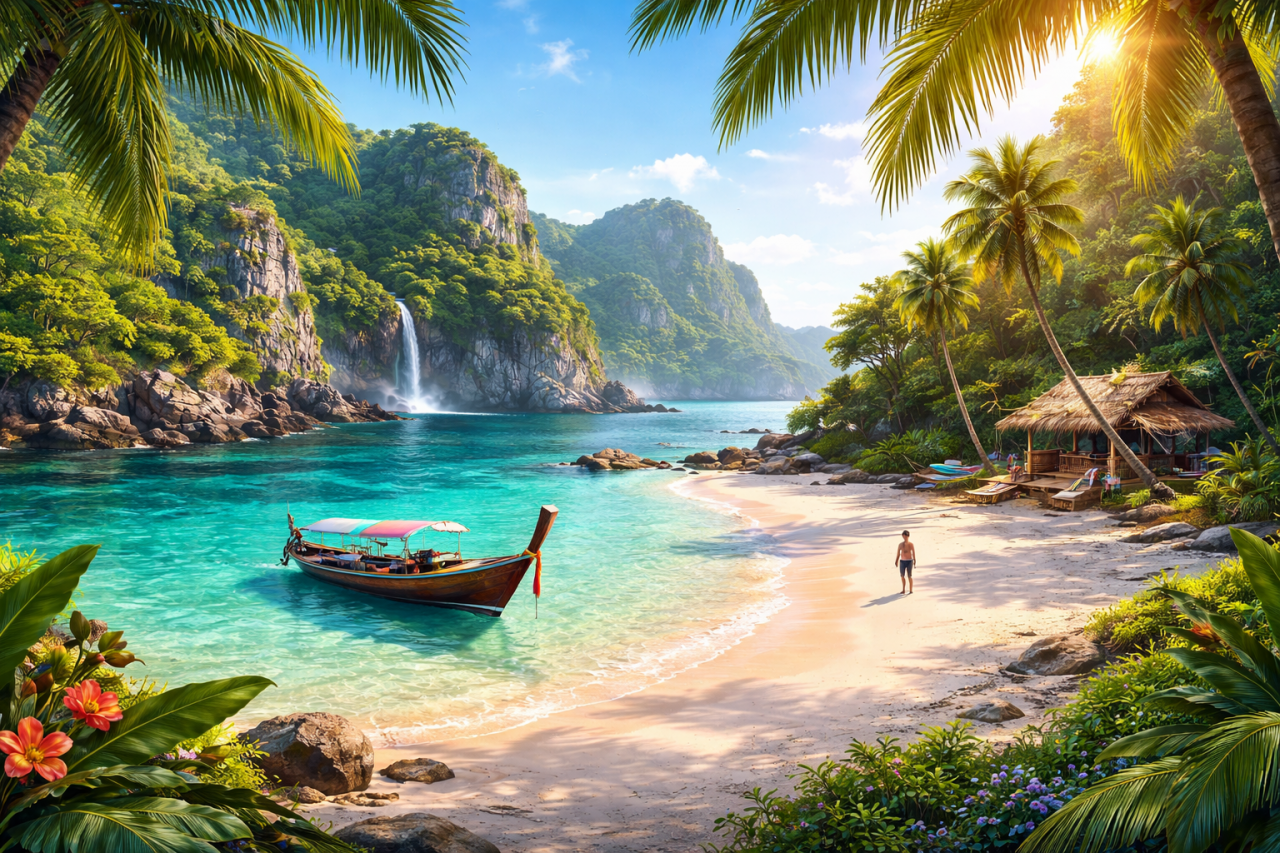
Koh Samui at dusk has a way of softening edges. The heat loosens, the sea breathes a cooler salt, and a quieter tempo takes over. There are well-known corners of the island — Chaweng’s bustle, Lamai’s nightlife — and then there are smaller, quieter places that arrive like an old friend. This is about one of those softer corners: a tucked-away stretch of coast and the gentle village life that makes it feel like paradise.
Finding the quiet: a lesser-known beach
There’s a small beach where mornings start with fishermen’s nets and evenings end with a muted orange light. The sand is fine, the water clear, and you can watch longtails bob by as if they have nowhere urgent to go. It’s not about dramatic cliffs or big resorts, but about scale: low palms, a handful of beach chairs, and enough space to breathe.
- Tip: Visit early in the morning for calm water and a local market scene, or arrive late afternoon to enjoy cooler light and fewer crowds.
- How to find it: You can search for it on Google Maps by typing: “Mae Nam Beach” or “Bophut Beach” to explore quieter stretches nearby. If you prefer exploring by scooter, take it slow — the island rewards unhurried routes.
A walk through village life
Behind the beach there’s a village with a rhythm set by temples, cafés, and family-run restaurants. You’ll hear the clink of dishes, the rumble of a pickup, and the occasional laughter of kids running after a dog. The shops here favor local goods; the cafés often serve coffee with condensed milk, and the food is unpretentious and excellent.
- Local recommendations:
- Visit Fisherman’s Village Walking Street in Bophut in the evening for stalls and street food, but go with patience — it can be busy on market nights.
- For quiet coffee, look for small cafés a few streets inland where locals congregate.
A modest historical note: fishing and coconut farming shaped these communities. You’ll still see that lineage in daily life — from the nets drying in the sun to the palms shading little plots.
Where to eat like a local
The best meals here are the ones that arrive with a smile and minimal fuss. Seafood is naturally fresh; curries are creamy and aromatic; som tam (papaya salad) will punish and reward you in the same bite. Sit at a table near the street and watch life pass; food tastes better this way.
- Try ordering:
- Grilled fish with lime and chili, cooked over charcoal.
- Massaman curry for something mellow and spiced.
- Fresh fruit shakes — mango, pineapple, and coconut are excellent.
Practical caution: If you’re sensitive to spice, ask for “mai pet” (not spicy). Also, check the menu for any seasonal or catch-of-the-day specials; these are often the best value.
Small temples and quiet ceremonies
Scattered through the area are several modest temples where monks chant and devotees make merit. These places aren’t typically loud tourist sites; they’re for reflection, ritual, and community gatherings.
- Respectful behavior:
- Remove shoes before entering the shrine area.
- Dress modestly — shoulders and knees covered are appreciated.
- Ask before taking photos of people praying.
You can search for: “Wat Phra Yai (Big Buddha)” if you’re curious about a larger, more visited site, but for tranquil temple moments, favor smaller local wats that sit off the main roads.
How to get around and where to stay
Koh Samui is best explored with a mix of relaxed walking and short scooter trips. Roads are hilly in parts and can be narrow, so take care after dusk when visibility drops.
- Transportation tips:
- Rent a scooter from a reputable shop and confirm helmet condition.
- Use metered taxis or songthaews (shared trucks) for short distances if you prefer not to drive.
- Keep photocopies of your passport and rental paperwork in case of any questions.
For lodging, look for family-run guesthouses or small boutique bungalows rather than large resort chains if you want that intimate vibe. These places often have hosts who know local stories and can point you toward quiet spots not listed in guidebooks.
A few respectful reminders
This island lives because of its people and its environment. Small gestures matter: take your trash with you, avoid single-use plastics where possible, and support local vendors when you can. Remember that tide and weather affect swimming conditions — ask a local about currents before heading out to sea.
A soft historical aside: Koh Samui’s modern tourist life blossomed in the late 20th century, but its roots are older — in fishing, rice, and coconut. That history shows in simple tastes and patient hospitality.
Evening rituals and the invitation to linger
At dusk the place softens. Lamps come on. A café might set out a few candles. Folks drift toward seafood barbecues, and the sea glows on its own schedule. Stand by the water for a while and notice how the sky organizes itself — first clear, then a gradient, then stars, simple as a practiced pause.
If you go, go deliberately. Walk rather than race. Talk to someone who lives here. Buy a snack from a stall. Take time to sit and watch the light change. Paradise, in this corner of Koh Samui, is less a postcard and more a series of small, generous moments that add up.
You can search for it on Google Maps by typing: “Mae Nam Beach”, “Bophut Fisherman’s Village”, or “Wat Phra Yai (Big Buddha)”.

Comments (0)
There are no comments here yet, you can be the first!