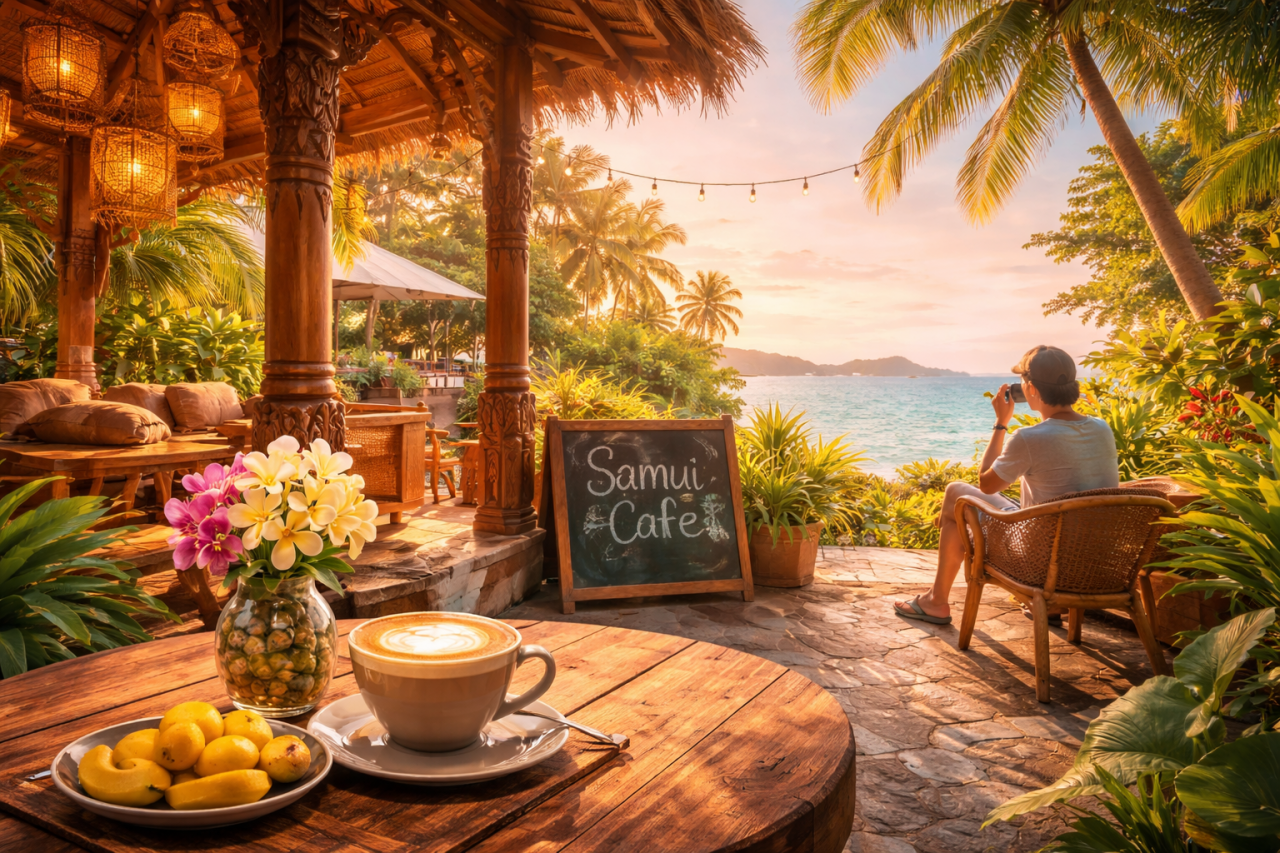
There’s a particular café on Koh Samui where the soundtrack is a mix of quiet surf, slow jazz, and the hum of a café grinder that knows what it’s doing. The plants hang in macramé, the tables are rough-hewn teak, and every now and then a breeze carries jasmine and the faint memory of charcoal from a nearby street stall. It’s the kind of place that makes you slow down without arguing the point — like Bali decided to take a long, comfortable holiday in the Gulf of Thailand and left a few design-savvy friends behind.
Below I’ll sketch the scene, the practical how-tos, and a few gentle warnings so your visit feels like a well-poured cup: warm, aromatic, and leaving you wanting just a little bit more.
First impressions: Why it feels like Bali
Walk in and the aesthetic is unmistakable: open plan, lots of wood and rattan, potted philodendrons dangling at eye level, and cushions in indigo dyes that look like they’ve paddled all the way from Ubud. The staff smile in that easy, patient way you see in both places — not performative, just efficient warmth.
But Koh Samui gives it a twist. The heat has a humid, mango-sweet quality; the light slips through coconut palms rather than dense Balinese jungle. The menu mixes Bali-ish smoothie bowls with Thai khao tom and sticky rice, which somehow feels less like fusion and more like a friendly conversation between neighbours.
The café vibe: what to expect
- Atmosphere: Low-key, a little boho, with plenty of shaded outdoor seating. Mornings are for laptops and long coffees; late afternoons are for iced tea and watching the light on palm trunks.
- Crowd: A mix of expats, long-stay digital nomads, couples taking a break from the beach, and friendly locals. It’s not a nightclub scene; it’s a sitting-on-the-porch scene.
- Food and drink: Expect espresso-based drinks, coconut lattes, smoothie bowls, and a handful of Thai breakfasts like jok (rice porridge) or omelettes served with fragrant jasmine rice.
Practical tips for visiting
- Timing: Go early (7:30–10:00) if you want cooler air and steadier wifi. Late afternoon (16:00–18:00) is magical for golden light and cooler breezes.
- Dress: Lightweight, respectful clothing works best. If you’re popping over to a nearby temple afterwards, you’ll want shoulders and knees covered.
- Payment: Many cafés accept cards, but carrying some Thai baht is wise for small purchases and tuk-tuks.
- Transport: Rent a scooter if you’re confident; it’s the easiest way to hop between beaches and cafés. If not, metered taxis and songthaews (shared pick-up trucks) are widely available.
Nearby spots to pair with your coffee
This café pairs well with a slow morning and a short local errand or stroll. Here are a few names to keep in mind—search them on Google Maps by typing the place names into the app for exact locations.
- Chaweng Beach — for a wide, active beach with a lively promenade and plenty of snack stalls.
- Lamai Beach — quieter than Chaweng and good for a relaxed swim or beach walk.
- Big Buddha Temple (Wat Phra Yai) — a short drive away, offering a calm view and cultural context.
- Fisherman’s Village, Bophut — for shaded evening markets, seafood restaurants, and a gentler seaside stroll.
Tip: If you want to take the scenic route back, ask a local for the coastal road rather than the main highway; it’s slower but kinder on the eyes.
Best time of year to visit Koh Samui
Koh Samui’s microclimate is kinder than some other Thai islands. The most pleasant months are December to April — drier, sunnier, and ideal for beach days and rooftop dinners. The monsoon season can vary, but typically September–October bring more rain. Even then, showers are often intense and brief; they make the air smell like wet earth and coconut husks, which is oddly restorative.
Cultural notes and respectful tips
- Temples: When visiting temples such as Wat Phra Yai (Big Buddha), dress modestly. Remove shoes before entering wihan (assembly halls) or other indoor shrine spaces.
- Local etiquette: Wai (a slight bow with palms pressed together) is a polite greeting; returning smiles and a small wai is always appreciated but not compulsory.
- Tipping: Not required, but leaving small change or rounding up at cafés and restaurants is a friendly gesture for good service.
A few personal observations
- The soundscape here is a gentle surprise: motorbikes and the occasional market cry sit comfortably under bird calls and distant surf. It feels lived-in, not staged.
- Food can be unexpectedly brilliant in simple joints. Don’t skip the roadside satay or a plain plate of som tam (green papaya salad) when you’re hungry and curious.
- Pace: Expect a slower, more deliberate tempo than city travel. Embrace it. The island rewards those who let it set the rhythm.
Where to sit, what to order
- Seat choice: If you want shade and people-watching, take a table facing the street. For a breezy, introspective hour, find a corner under the palms.
- Order suggestion: A coconut latte or espresso and a small dish of mango sticky rice (if it’s breakfast-ish) pairs wonderfully with a notebook or a good book.
- Power and wifi: Most cafés offer wifi and plugs, but don’t assume unlimited time. If you need to work, buy a couple of drinks and ask about the network password politely.
Final thought: travel gently
Koh Samui resists hurry. Between the sea-salted mornings and jasmine-scented evenings, the island reminds you that travel is often about small rituals: coffee at the right hour, a swim before sunset, and a respectful chat with a vendor. The café that feels like Bali is less about imitation and more about shared aesthetics — quiet design, slow service, and sun-worn wood — and Samui gives it its own mellow heart.
If you find the spot, sit for a while. Let the place do what good islands do best: make you slow down enough to notice the small, satisfying details.

Comments (0)
There are no comments here yet, you can be the first!