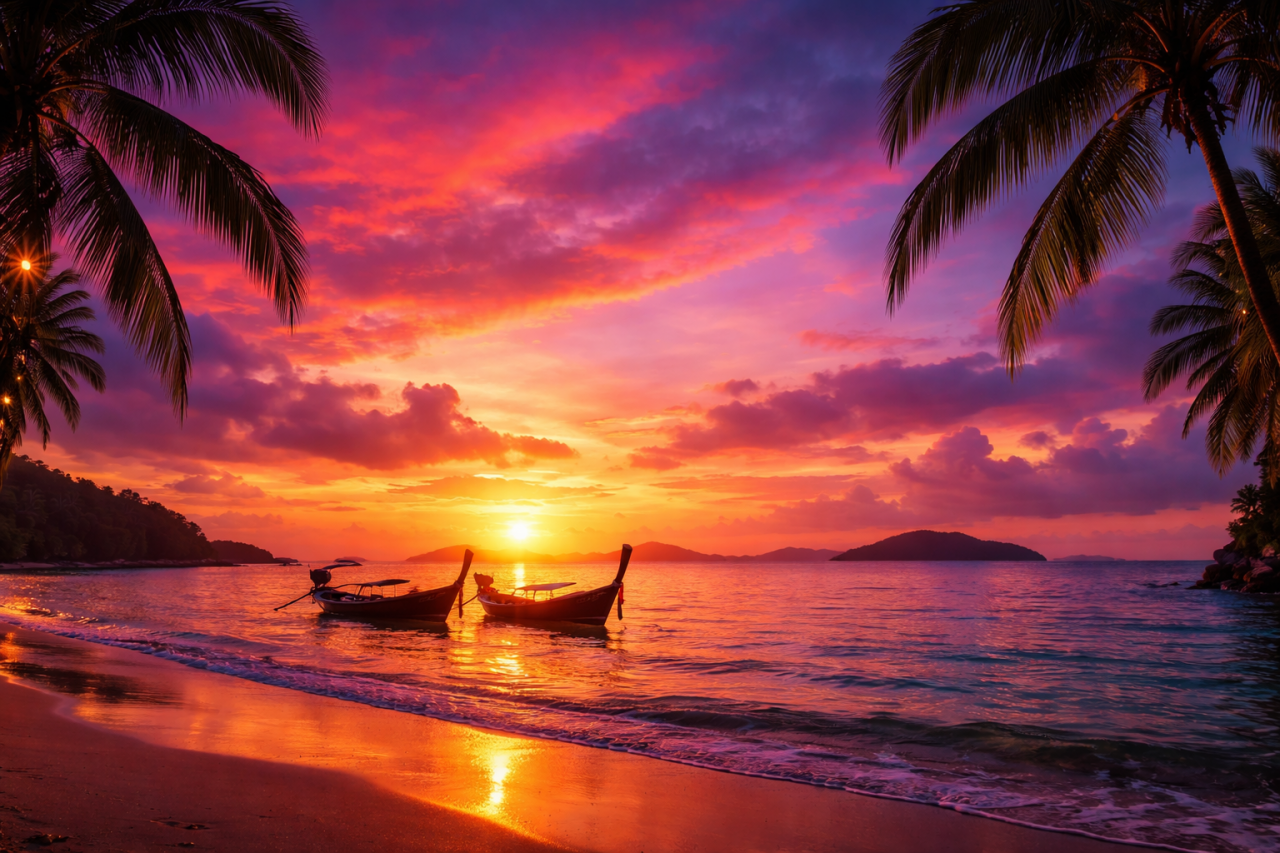
The light tilts just so on Koh Samui, and a single evening can feel like a small revelation. Walk toward the water with a towel slung over your shoulder, and a vendor’s laugh from the market will fix itself in your memory like a stamp. This is an island that invites slow noticing: where to time a ferry, which beach shacks still serve the best som tam, and when a temple bell will sound at dusk.
Getting to Koh Samui and getting around
Koh Samui is reached by air or sea, and each arrival feels different. Samui International Airport (USM) brings you into a compact terminal a short ride from the main beaches; from Surat Thani you can take a ferry for a more gradual approach to island life.
Practical tips:
– If your schedule is loose, choose the ferry for a softer arrival and wider views of the archipelago.
– Rent a scooter for short hops—traffic is relaxed outside peak hours—but only if you’re confident riding; wear a helmet and carry an international driving permit if required.
– Taxis and songthaews (shared pick-up taxis) are plentiful; agree on a fare before you leave the pier or hotel.
You can search for it on Google Maps by typing: Samui International Airport (USM).
Best beaches for different moods
Koh Samui’s coastline offers everything from wide crescent sands to secluded coves. Each beach has its own tempo and small rituals—morning market runs before the sun, afternoon hammocks, and sunset cocktails.
Highlights to consider:
– Chaweng Beach for lively stretches of sand, cafés, and people-watching.
– Lamai Beach for a slightly quieter atmosphere with good swimming and local eateries.
– Bophut Fisherman’s Village for a relaxed evening scene with boutiques and seaside dining.
– Maenam Beach for quieter sands and views across to Koh Phangan.
You can search for it on Google Maps by typing: Chaweng Beach, Lamai Beach, Bophut Fisherman’s Village, Maenam Beach.
How to choose:
1. Stay near Chaweng if you want nightlife and a wide range of services.
2. Pick Maenam or Bophut for a more measured pace and family-friendly evenings.
3. Head to smaller coves on the island’s quieter coasts if what you want is solitude at sunrise.
Temples and quiet moments
Temples on Koh Samui are not only places of worship but also anchors of daily life—monks sweep courtyards, bells ring, and incense curls through the air. Visiting feels like entering a room where time has softened.
Places to visit:
– Wat Phra Yai (Big Buddha) for a prominent golden statue and sweeping sea views.
– Wat Plai Laem for graceful statues and a calm, reflective pond.
You can search for it on Google Maps by typing: Wat Phra Yai (Big Buddha) and Wat Plai Laem.
Etiquette tip:
– Dress modestly; cover shoulders and knees, and remove shoes before entering temple buildings. Move quietly and observe the rituals rather than interrupting them.
Where to eat: markets, cafes, and beach shacks
Food is an island conversation. You will hear the clatter of woks and the call of vendors, and you’ll learn which stall fries the crispiest coconut pancakes. Eat where the locals eat for the best discoveries.
Recommended spots and experiences:
– Fisherman’s Village Walking Street (Bophut) on Friday evenings for an array of stalls, crafts, and seafood.
– Maenam Night Market for late-night eats and coconut desserts.
– Small beach shacks along Chaweng and Lamai that serve grilled fish and som tam.
You can search for it on Google Maps by typing: Fisherman’s Village Walking Street (Bophut), Maenam Night Market.
Quick ordering tips:
– Point to the dish you want if language feels like a barrier.
– Try a local dessert: khanom krok (coconut pancakes) and fresh coconut ice cream.
– Carry small change—many market vendors prefer it.
Hidden walks, waterfalls, and viewpoints
There are short hikes and roadside viewpoints that reward early risers. Switchbacks, a shaded trail, and the sound of water will often outnumber the crowds.
Notable natural spots:
– Na Muang Waterfall (Na Muang 1 and Na Muang 2) for a cooling dip after a short walk.
– Secret Buddha Garden for sculptures tucked into jungle foliage and a quiet plateau with views.
You can search for it on Google Maps by typing: Na Muang Waterfall and Secret Buddha Garden.
Practical note:
– Waterfalls can be slippery after rain—sturdy shoes help. Bring water and insect repellent for any jungle walk.
Practicalities, money, and health
Koh Samui is well set up for travelers, but a few steady habits make a trip smoother and more relaxed.
Useful practices:
– Keep some Thai baht in small notes for markets and tips.
– Buy travel insurance that covers scooter accidents if you plan to ride.
– Stay hydrated and use reef-safe sunscreen when swimming or snorkeling.
ATMs and pharmacies are easy to find in main towns; on quieter stretches, bring what you need for the day.
When to go and a note about crowds
Seasons shape both light and solitude. The best-known tourist windows are the dry months, but shoulder seasons can offer softer prices and emptier beaches.
Timing guide:
– High season (roughly December to March) brings reliable sun and more crowds.
– Shoulder months (April, early May, and late October to November) can yield fewer people and better rates.
– Rainy season (May to October) is variable—sudden showers, but also unexpected pockets of calm.
If you prefer evenings that linger and beaches with more breathing room, aim for the shoulder months and plan a midweek stay.
Evening rituals: sunsets and slow plates
A Samui sunset asks you to slow down and to find a perch—on a beachfront bar stool, a rocky headland, or the deck of a slow ferry. The light stays long and then folds away, and you are left holding a memory that feels gently expanded.
How to savor it:
– Arrive at your chosen viewpoint 20–30 minutes before sunset to catch the whole arc.
– Bring a light layer; sea breezes can sharpen as the sun drops.
– Let a local cocktail or a plate of grilled prawns be the punctuation.
You can search for it on Google Maps by typing: Bophut Beach sunset spots or Chaweng Beach sunset spots.
Final, small pieces of advice
Move slowly when you first arrive; let the island set the pace. Trust a vendor’s recommendation for a dish you’ve never tried. Keep your phone charged for maps, but look up often—there is a texture to Koh Samui that photos can’t fully hold.
Short checklist:
– Carry a photocopy of your passport and keep the original in a hotel safe.
– Have cash for markets and small boats.
– Respect local customs and temple etiquette.
This Samui sunset looks unreal because it is composed of small, honest things: a fisherman’s silhouette, a child’s barefoot sprint, the smell of coconut grilling. Stand still long enough and the island will show you the pathway to its quieter edges.

Comments (0)
There are no comments here yet, you can be the first!